
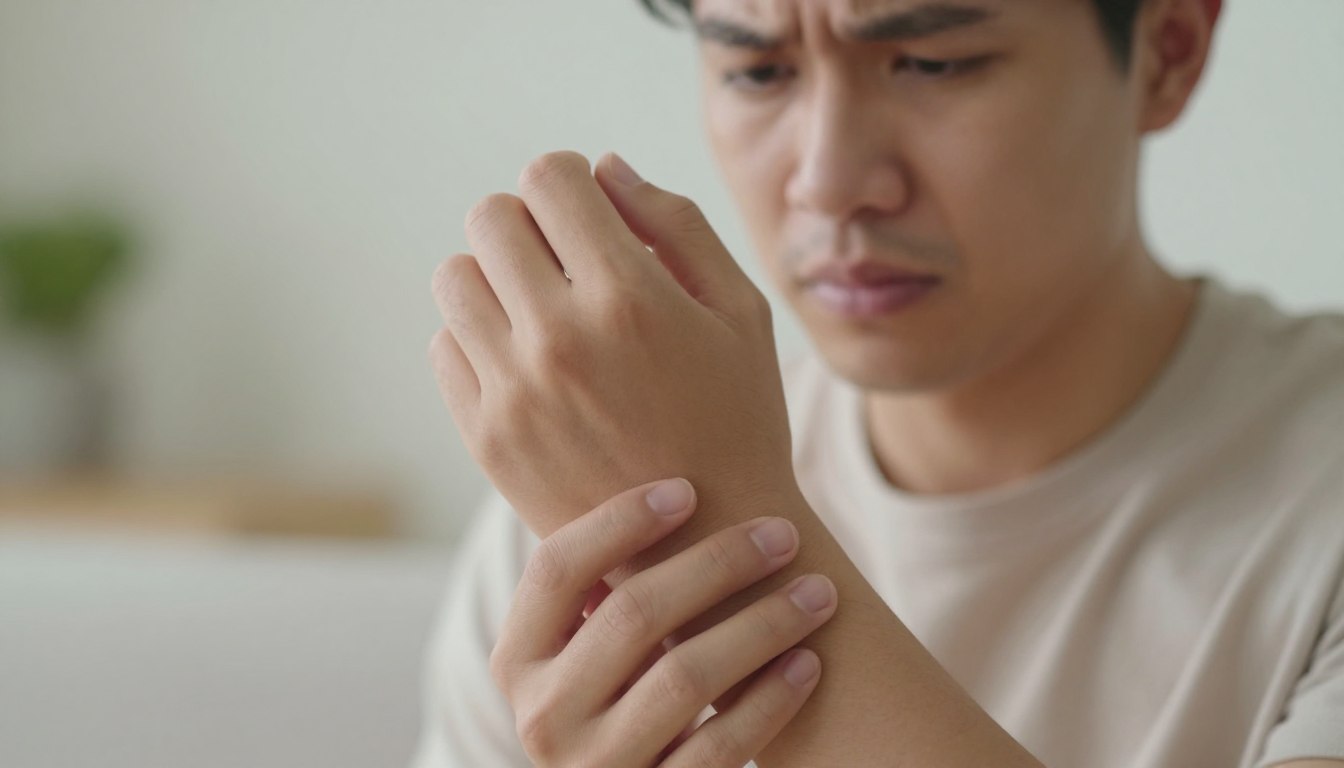
Have you ever scratched and found no rash, yet the itch keeps returning—what is your body trying to tell you?
I define this problem as pruritus: an urge to scratch that occurs without obvious rash or classic skin lesions. Pruritus may be localized to one spot or widespread, and it can be a lone symptom or a clue to dermatologic, systemic, neurologic, hematologic, or psychogenic causes.
Itch is one of the most common complaints I see. Nearly one in ten people report bothersome pruritus over two weeks, and recent global estimates approach 39.8% for any recent itch. When itching lasts more than six weeks, we call it chronic pruritus.
Persistent or unexplained skin itching without rash deserves attention because it can signal treatable conditions such as dry skin (xerosis), eczema, scabies, liver or kidney disease, thyroid problems, iron deficiency, or neuropathy. Left unchecked, itchy skin no rash often disrupts sleep and quality of life.
I will cover the common causes of itchy skin no rash, explain how pruritus can occur with minimal visible change, review systemic and infectious contributors, discuss psychogenic and neurologic sources, outline the diagnostic steps I use in practice, and offer practical hypoallergenic relief measures.
Key Takeaways
- Pruritus without visible rash is common and can be localized or generalized.
- Causes range from dry skin and contact irritants to systemic illnesses like liver or kidney disease.
- Chronic itching (over six weeks) warrants medical evaluation to rule out treatable conditions.
- Accurate history and focused exam guide tests and prevent unnecessary treatments.
- Practical, hypoallergenic strategies often relieve symptoms while the underlying cause is addressed.
Common causes of itchy skin without rash
I see many people who describe skin irritation no rash and expect a clear patch or redness. The truth is itch can come before any visible change, or appear without one at all. Below I outline the usual culprits and practical ways to spot them.
Dry skin (xerosis) and environmental triggers
Dry skin is the most common reason for dry skin itchy no rash, particularly in older adults or in winter. Hot showers, harsh soaps, and low indoor humidity strip oils and weaken the skin barrier. The result is rough, flaky areas and persistent pruritus on arms, legs, back, palms, and soles.
I advise gentle changes first. Short, lukewarm showers and ceramide-containing, fragrance-free emollients soothe the barrier. These steps form the basis of itchy skin remedies without rash for many patients.
Inflammatory skin conditions that may present with minimal visible changes
Atopic dermatitis can begin as intermittent itching before classic eczema appears. Early psoriasis sometimes causes irritation or discrete scale without obvious plaques. Urticaria produces transient welts that may resolve, leaving itch behind.
When I suspect a subtle inflammatory disease, I look for pattern, family history, or triggers. Targeted emollients and topical anti-inflammatories help while we watch for evolving signs.
External irritants and allergic exposures
Soaps, detergents, cosmetics, and fragrances often cause skin irritation no rash at first. Allergic contact dermatitis can start as itch without a clear rash until exposure repeats or concentrates.
Avoiding known irritants and switching to hypoallergenic itchy skin relief—fragrance-free products and nonsoap cleansers—gives rapid improvement for many people. If itch persists, patch testing can identify elusive allergens and guide longer-term avoidance.
Why Is My Skin Itchy but There’s No Rash?
I often see patients who ask, “Why Is My Skin Itchy but There’s No Rash?” They feel intense scratching without visible redness or bumps. Pruritus is a symptom, not a diagnosis, and it can arise when nerve endings in the skin are triggered by dryness, irritants, or circulating chemicals. This explains many cases of mystery skin itch no rash.
Understanding pruritus as a symptom versus visible skin disease
Pruritus may occur with little or no outward skin change. Nerve sensitization, transient histamine release, or a weak inflammatory response can create itch without clear epidermal signs. Migratory or intermittent itch happens when the skin barrier shifts or when small, fleeting reactions occur.
When the itch moves around the body or comes and goes, think of dry skin, intermittent hives, shifting eczema, scabies spread, or early systemic problems. Nighttime worsening is common because reduced distractions and cooler skin amplify nerve signals.
When to suspect systemic causes rather than a primary skin disorder
I suspect an internal cause when itch is widespread, markedly worse at night, or long-lasting. Look for red flags: persistent skin itch no rash that lasts beyond two weeks, sleep disruption, weight loss, fatigue, jaundice, or abdominal symptoms. Those signs raise concern for liver, kidney, endocrine, hematologic, or neurologic contributors.
In clinical practice, a focused history and basic labs help separate skin-limited problems from systemic disease. If the itch affects daily life or comes with systemic symptoms, I recommend medical evaluation. Early assessment can identify treatable causes and prevent prolonged discomfort from the mystery skin itch no rash that many patients describe.
Systemic medical causes of itching with no rash
I often see patients who complain of persistent skin pruritus no rash and no obvious dermatologic cause. This symptom can point to internal illness rather than a skin problem. I will outline key systemic conditions that commonly produce itching without visible rash and what to watch for.
Liver-related pruritus
Cholestatic liver disease can cause intense, generalized itch. Bile salts and other pruritogens accumulate in cholestasis from hepatitis, cirrhosis, or intrahepatic cholestasis of pregnancy. Patients often report itch that is worse at night and affects the trunk, limbs, neck, palms, and soles. Look for jaundice, abdominal pain, fatigue, and abnormal liver tests. Treating the underlying liver disease is the main approach to relieve symptoms.
Kidney-related pruritus
Uremic pruritus occurs in chronic kidney disease and is often widespread and disruptive to sleep. Toxin buildup, dry skin, and altered immune signaling may contribute. Dialysis sometimes reduces symptoms. I recommend aggressive skin hydration, emollients, and targeted therapies such as gabapentin or phototherapy in select cases when conservative measures fail.
Endocrine and blood disorder contributors
Thyroid dysfunction, both hypothyroidism and hyperthyroidism, commonly causes dry, itchy skin without a rash. Iron deficiency and other hematologic issues can present with unexplained pruritus. Correcting hormonal imbalances or nutrient deficiencies often improves the symptom.
Neurologic causes of localized itch
Neuropathic itch stems from nerve damage due to radiculopathy, post‑herpetic neuralgia, or peripheral neuropathy. These patients report focal itching in a dermatomal pattern without primary skin lesions. Central sensitization and altered neural pathways can perpetuate chronic itch even after the initial nerve insult resolves.
I emphasize that itchy skin no rash systemic causes require a focused medical evaluation. A careful history, targeted lab work, and coordination with hepatology, nephrology, endocrinology, or neurology can identify reversible contributors and guide therapy.
Infectious and parasitic causes that may lack an obvious rash
I review infections and parasites when patients report unexplained itch with little or no visible change. Some causes create intense discomfort while leaving the skin looking near normal. I point out key clues that help separate these from dry skin or systemic disease.
Scabies is a classic culprit. Caused by the mite Sarcoptes scabiei, scabies often produces intense nocturnal pruritus and subtle burrows or tiny papules that are easy to miss. Common locations include interdigital spaces, wrists, waistline, axillae, and buttocks. Close personal or household contact spreads the mites. I recommend targeted examination, skin scrapings when needed, and treatment with prescription permethrin or oral ivermectin. Treating household contacts and washing bedding helps prevent reinfestation.
Early fungal or bacterial infections may cause localized itch before a clear rash appears. Tinea and candidiasis can start as pruritus with minimal redness. Post-infectious pruritus can follow viral illnesses such as varicella or herpes zoster. When I suspect an infectious source, I use KOH prep, microscopy, or culture and refer to dermatology if the diagnosis remains unclear.
Not all infectious presentations are obvious. In clinical practice I consider infectious causes itchy skin no rash when symptoms are focal, worsen at night, or cluster among close contacts. I assess travel history, recent antibiotic use, and underlying conditions that raise infection risk.
For persistent symptoms I emphasize targeted testing and timely treatment. Addressing skin itching without rash infections early can prevent spread, reduce sleep disruption, and speed recovery.
Psychogenic and neurologic causes of itchy skin no rash
I often see patients who describe a persistent, unexplained itch with no visible changes. This can come from the mind, the nerves, or both. Distinguishing between psychogenic itchy skin no rash and neuropathic itch no rash guides treatment and prevents unnecessary tests.
Stress and anxiety can amplify itch signals and trigger a cycle of scratching that leaves little to no visible rash. I ask about daily stressors, sleep, and habits to find patterns. Habit reversal, cognitive-behavioral therapy, and mindfulness techniques help many people break the scratch–itch loop.
When itch follows one area or a dermatome, I suspect nerve injury. Conditions like post-herpetic neuralgia or spinal radiculopathy produce focal itch with scant skin findings. I look for numbness, tingling, or pain that points to a neuropathic origin.
Treatments differ by cause. For psychogenic itchy skin no rash, behavioral approaches and stress management are central. For neuropathic itch no rash, I consider gabapentin, pregabalin, topical capsaicin, or lidocaine patches and discuss referral to neurology or pain specialists when needed.
Sometimes the problem is a mystery skin itch no rash that blends psychological and neurologic features. I collaborate with psychiatrists, neurologists, and dermatologists to tailor therapy, track response, and adjust plans until symptoms improve.
How clinicians diagnose itchy skin when there’s no rash
I begin with a focused history to narrow causes and guide the workup. I ask about onset, whether the itch is localized or generalized, and if it moves from place to place. I probe timing patterns, including worse-at-night symptoms, and recent changes in soaps, detergents, medications, or travel. I ask about systemic clues such as jaundice, weight loss, fatigue, fever, and sleep loss. This approach helps target a diagnosis itchy skin no rash without needless testing.
Next I perform a targeted physical exam. I inspect palms, soles, scalp, interdigital spaces, groin, and nailbeds for subtle signs like burrows, excoriations, tiny papules, or scale. I check for jaundice and lymphadenopathy. Even faint findings can point to a cause and reduce the need for broad screening in a persistent skin itch no rash workup.
I select laboratory and diagnostic tests based on the history and exam. Typical first-line tests include a CBC with iron studies, a comprehensive metabolic panel to review liver enzymes and bile markers, and renal function tests such as BUN and creatinine. I add TSH or thyroid panel when metabolic causes are suspected. These steps form the backbone of skin pruritus no rash tests for many patients.
When infection or infestation is a concern, I use targeted testing. Skin scraping with KOH, microscopic evaluation for scabies, and culture or PCR for specific pathogens can be decisive. Patch testing for contact allergens and skin biopsy are useful when the clinical picture remains unclear after initial evaluation.
I reserve imaging and specialist referral for suspected systemic disease or red flags. A chest x-ray, abdominal ultrasound, or consultation with hepatology, nephrology, or neurology may follow if labs or symptoms point that way. I advise urgent evaluation for severe itch that disrupts sleep, generalized unexplained itch lasting more than two weeks, or any signs of systemic illness requiring immediate attention.
Practical treatments and hypoallergenic itchy skin relief
I review simple, effective steps you can take when your skin itches but shows no rash. These options focus on fast comfort and safer long-term care. I include lifestyle tips, over-the-counter choices, and medical therapies that target the cause rather than only masking symptoms.
Immediate at-home measures for fast relief
Start with cool compresses or a brief oatmeal bath using colloidal oatmeal to calm the skin. Take short lukewarm showers and pat skin dry. I advise refrigerated moisturizers or ceramide-rich creams to reduce water loss and provide hypoallergenic itchy skin relief.
Keep nails trimmed to avoid breaks from scratching. Wear breathable cotton clothing and avoid harsh soaps or fragranced cleansers. A single application of 1% hydrocortisone can ease focal itching. Topical menthol or crotamiton preparations may give a cooling effect for quick comfort.
Longer-term and medical therapies
For persistent symptoms I consider daily emollients and ceramide-containing moisturizers as maintenance. Phototherapy with narrowband UVB helps some people with chronic itch linked to kidney disease or other systemic causes.
Oral antihistamines can help overnight; sedating agents like diphenhydramine aid sleep while non-sedating loratadine or cetirizine work during the day. For scabies, permethrin 5% cream or oral ivermectin are guideline-recommended treatments. Neuropathic itch may respond to gabapentin, pregabalin, or topical agents such as capsaicin or lidocaine.
Treating the underlying condition is essential. I urge testing and management for liver, kidney, thyroid, or iron disorders when appropriate. Specialists can prescribe bile acid sequestrants or targeted antipruritic agents for cholestatic itch when needed. These steps form a practical plan for itchy skin no rash remedies and skin irritation no rash treatments.
I recommend fragrance-free, simple cleansers and moisturizers to minimize reactions. Patch testing can identify contact allergens if topical triggers are suspected. Be aware that heavy emollients can increase flammability risk; wash linens regularly and use caution near open flames.
When over-the-counter measures fail, seek dermatology or primary care evaluation. A tailored approach yields better results than guessing at itchy skin remedies without rash.
Conclusion
I have seen many people ask, “Why Is My Skin Itchy but There’s No Rash?” and the answer is usually layered. Most cases trace back to dry skin, mild inflammatory changes, contact irritation, or hidden infestations like scabies. At the same time, persistent skin itch no rash can be a clue to systemic problems such as liver or kidney disease, thyroid dysfunction, or iron deficiency, and it may also reflect neuropathic or psychogenic causes.
My practical advice starts with gentle skin care: frequent emollient use, lukewarm showers, fragrance-free products, and avoiding known irritants. For immediate comfort I recommend cool compresses, oatmeal baths, and short-term nighttime antihistamines when appropriate. If skin itching without rash is severe, widespread, disturbs sleep, lasts more than two weeks, or comes with systemic signs like jaundice or weight loss, seek medical evaluation promptly.
When you see me or another clinician, we will take a focused history and exam and order basic labs such as CBC with iron studies, comprehensive metabolic panel, renal function, and TSH. Additional testing may include skin scraping, patch testing, or biopsy. Treatment aims at the root cause and ranges from emollients and topical anti-inflammatories to systemic antipruritics, phototherapy, or specialist referral. Addressing an underlying condition often gives the most durable relief for skin itching without rash.