Have you ever been in the middle of a high-pressure moment and suddenly felt an inexplicable prickle, a wave of heat, or a stinging sensation across your arms or face? You check the mirror, but there’s no rash, no sunburn, and no reason for it.
This isn’t your imagination. It is your Brain-Skin Axis in full communication. Your skin is the largest organ in your body, and it acts as a sensitive billboard for what’s happening in your mind.
1. The Biology of the “Nervous Burn”
When we are anxious, our body enters “survival mode.” This triggers a cascade of chemical reactions designed to help us fight or flee:
- The Hormone Flood: Adrenaline and cortisol surge through your system. While they help you stay alert, they also increase blood flow to the skin’s surface, causing that “flushed” or “burning” feeling.
- Nerve Hyper-sensitivity: Stress causes your nervous system to become “noisy.” Tiny nerve endings in your skin begin to misfire, sending signals of heat or pain to the brain even when there is no external heat source.
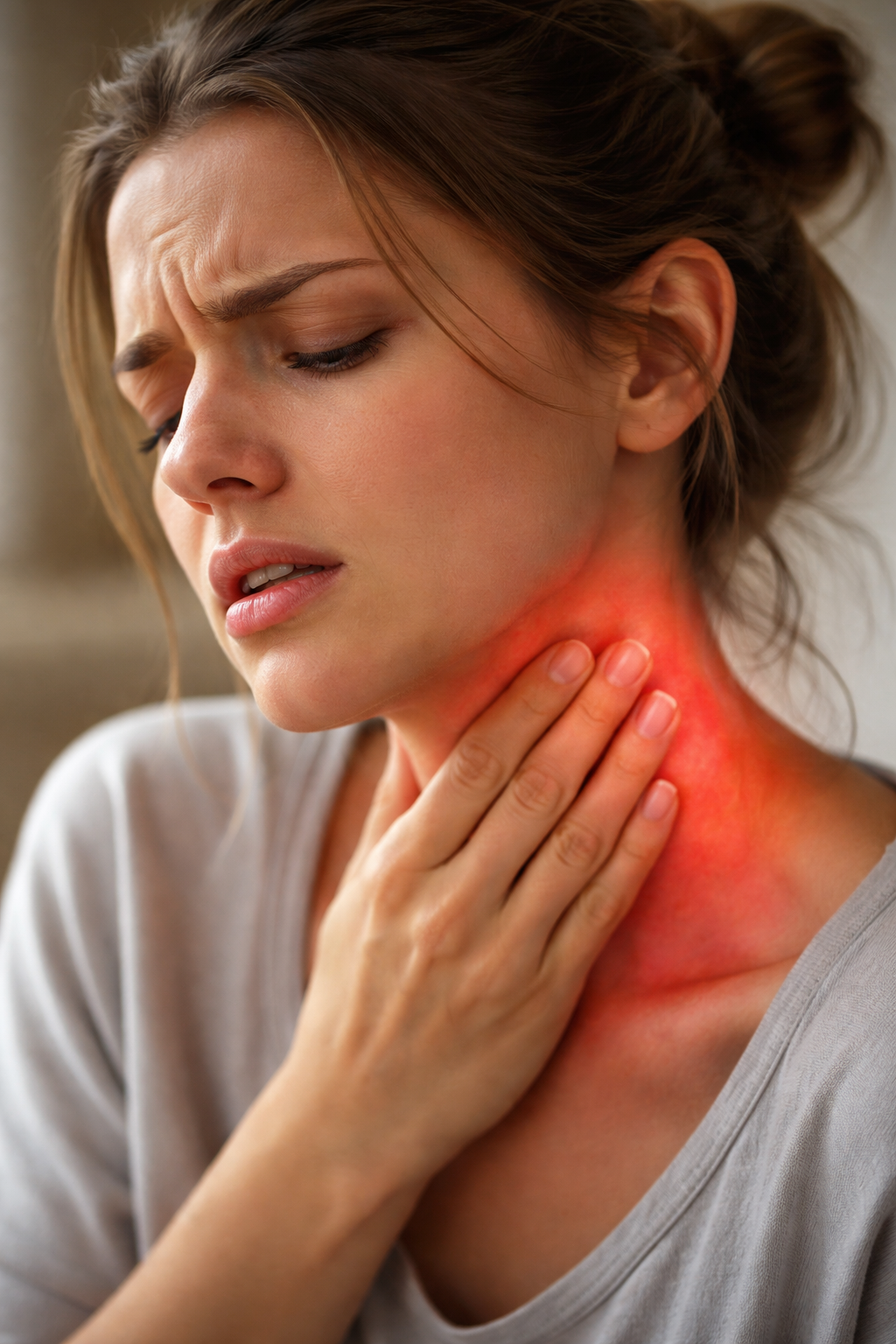
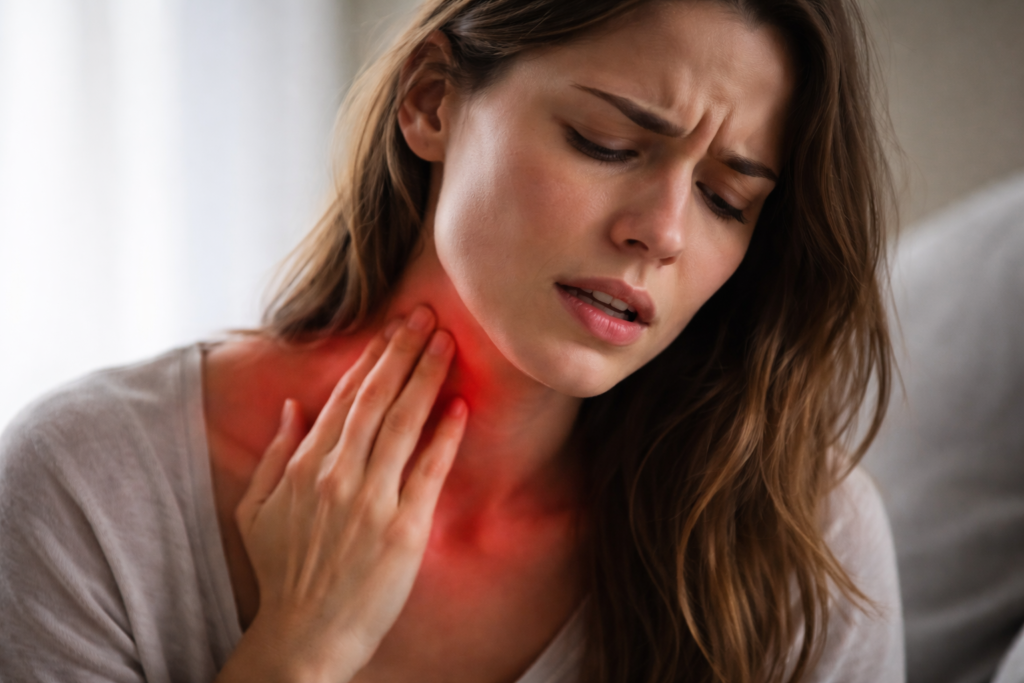
Visual Suggestion 1: > A close-up, high-quality photograph of a person’s neck or forearm. The skin shows a subtle, natural flush. The lighting is warm but slightly moody, reflecting a sense of internal tension. The person’s hand is gently hovering over the area, suggesting discomfort without a visible rash.
2. The Mental Magnifying Glass: Somatic Amplification
Anxiety doesn’t just create sensations; it makes us hyper-aware of them. This is known as somatic amplification.
When you are calm, you might not notice the slight friction of your shirt or a minor temperature change. But when you are anxious, your brain turns the volume up to 10. A tiny itch feels like a sting; a little warmth feels like a fire. This creates a stressful cycle: the sensation causes anxiety, and the anxiety makes the sensation feel even more intense.
3. Protecting Your “Stress Barrier”
Chronic stress actually weakens the skin’s physical barrier. High cortisol levels slow down the production of natural oils (lipids) that keep your skin hydrated and protected.
How to soothe the burn immediately:
- Cooling Therapy: Use a damp, cool cloth or a thermal water spray. This provides physical relief and sends a “calm down” signal to your nerves.
- Barrier-First Skincare: Reach for products containing Ceramides or Colloidal Oatmeal. These ingredients act like “glue,” repairing the cracks in your skin barrier caused by stress.
- Avoid the “Scrub” Trap: When your skin feels irritated, your instinct might be to wash it aggressively. Don’t. Use only soap-free, fragrance-free cleansers to avoid further triggering the nerves.
4. Stress Management as Skincare
If the root is in the mind, the cure must be there too. Managing your “internal weather” is just as important as the creams you apply.
- The 4-7-8 Breathing Technique: Inhale for 4, hold for 7, exhale for 8. This physically forces your nervous system out of “fight or flight” mode.
- Sleep Hygiene: Your skin does its heaviest repair work while you sleep. Lack of rest keeps cortisol high, keeping the “burn” alive.
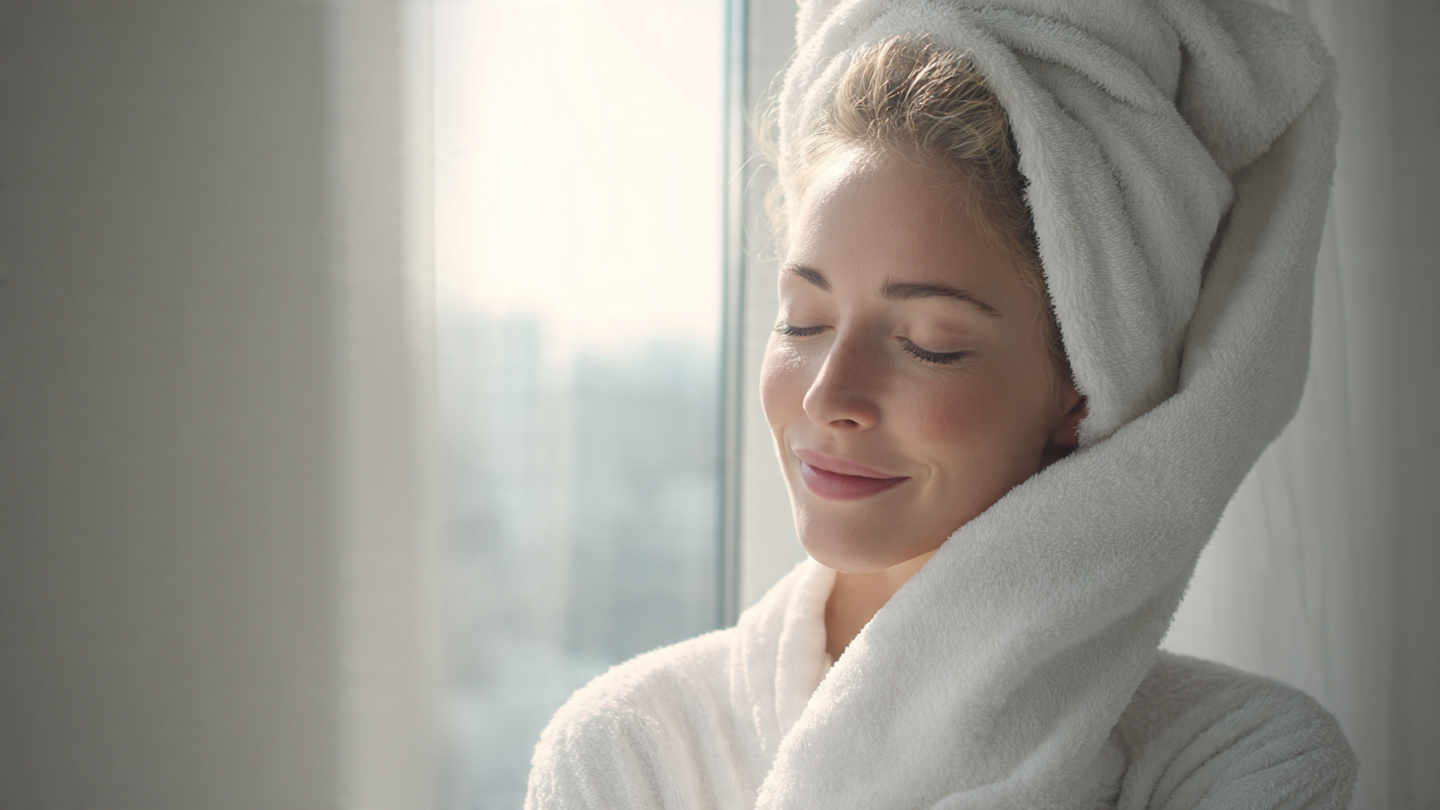
Visual Suggestion 2: > An image of a serene, minimalist bathroom setting. A person is seen from the side, eyes closed, applying a gentle cream to their face. The colors are soft blues, greens, and whites, symbolizing the transition from “burn” to “calm.” Natural light suggests a fresh start.
When to Seek Professional Guidance
While “anxiety burn” is common, it’s important to know when to call in the experts. Consult a dermatologist or a therapist if:
- The burning sensation is accompanied by blisters, peeling, or signs of infection.
- The sensation lasts for more than two weeks despite stress management.
- The skin discomfort is significantly impacting your ability to work or sleep.
Conclusion: Listening to Your Skin
Your skin isn’t “failing” you when it burns during stress; it’s communicating with you. By understanding the brain-skin connection, we can stop viewing these sensations as scary symptoms and start seeing them as reminders to slow down, breathe, and practice self-care.
Take a deep breath. Your skin, and your mind, deserve a moment of peace.
This article is for informational purposes and does not replace medical advice.
FAQ: Quick Answers
Q: Can anxiety cause skin burning without a rash?
A: Absolutely. This is often “neuropathic” in nature, meaning the nerves are sending heat signals even though the skin surface looks normal.
Q: How long does an anxiety-related skin burn last?
A: It can last from a few minutes (during a panic attack) to several days if you are experiencing a period of chronic, high-level stress.
Q: Will moisturizing help the burning?
A: Yes, but only if you use bland, fragrance-free moisturizers. Repairing the skin barrier makes the nerves less exposed to the environment, which can lower sensitivity.