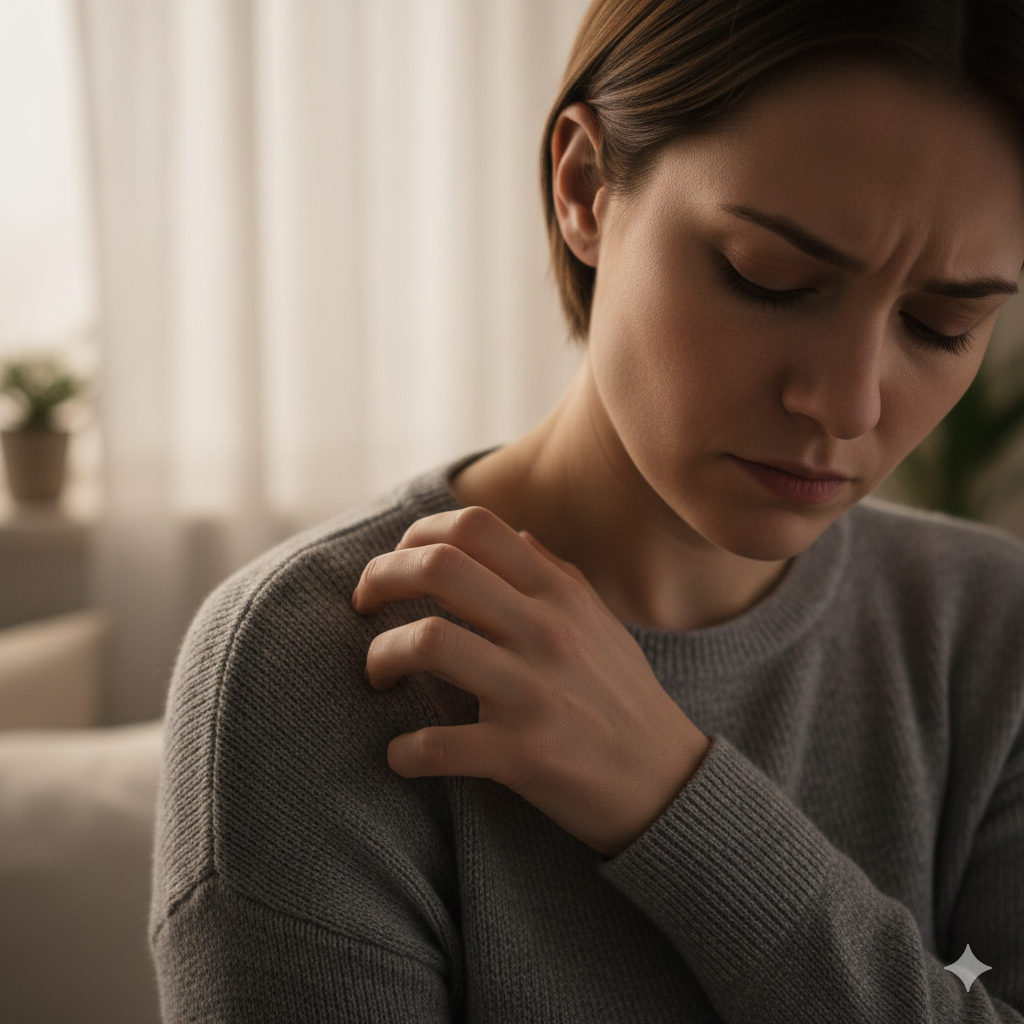
Have you ever noticed that the more stressed you feel, the more you start to scratch? You check for bug bites or new laundry detergents, but there is nothing there. In 2026, we call this the “Anxiety Itch”—a physical manifestation of internal emotional pressure.
Psychogenic itching (or Pruritus) is more than just a minor annoyance; it is a clear signal from your nervous system that your stress levels have crossed a threshold. Let’s look at why this happens and how you can stop the cycle.
1. The Science: Why Your Brain Makes You Itch
In the world of psychodermatology, we now know that the brain and skin are developed from the same embryonic layer. They are “twins” that never stop talking to each other.
The Histamine-Stress Connection
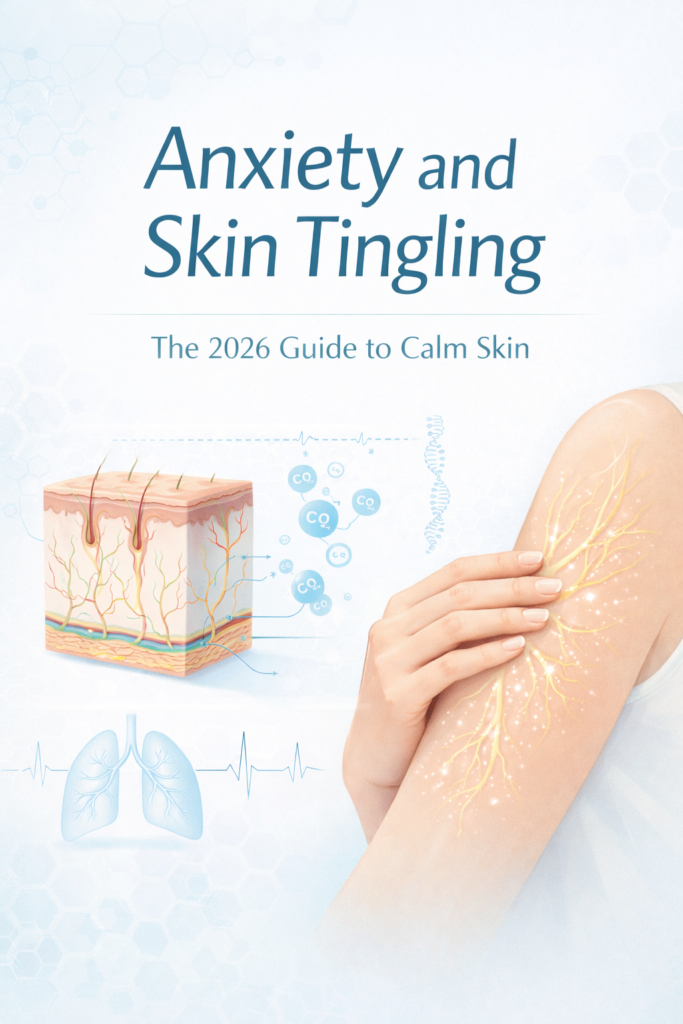
When you are anxious, your brain triggers the release of certain neurotransmitters and histamine—the same chemical released during an allergic reaction.
- The “False Alarm”: Your brain sends a signal that something is irritating your skin, even when there is no external trigger.
- The Neural Loop: The act of scratching provides temporary relief by distracting the nerves, but it actually damages the skin barrier, leading to more itching.
2. The 2026 “Itch-Scratch” Cycle
Modern life in 2026 brings unique stressors—constant connectivity and “hurry sickness.” This chronic state of alertness keeps the skin in a pro-inflammatory state.
- Emotional Triggers: Deadlines, social anxiety, or even repressed anger can manifest as an “attack” of itchiness on the scalp, back, or forearms.
- Somatic Focused Attention: Just like the “burning” sensation, the more you think about the itch, the more intense it becomes. This is the brain’s way of diverting mental pain into physical sensation.
3. How to Calm the “Anxiety Itch” Naturally
In 2026, we treat the skin through the lens of “Neurological Soothing.” Here is how to break the cycle:
Immediate Cooling Techniques
- Cold Exposure: Histamine is sensitive to temperature. Using an ice pack or a chilled aloe vera gel can “numb” the nerve endings and stop the itch signal instantly.
- Topical Neuro-Sootheners: Look for creams containing Menthol, Camphor, or Polidocanol. These ingredients target the itch receptors specifically without the need for harsh steroids.
Behavioral Resets
- Habit Reversal: When you feel the urge to scratch, try “tapping” the area or applying firm pressure instead. This satisfies the nerve ending without damaging the skin.
- Box Breathing: Lowering your heart rate through 4-4-4-4 breathing reduces the immediate flow of stress chemicals to the skin.
4. Strengthening the Skin-Mind Barrier
To prevent future outbreaks, you must focus on Barrier Resilience.
- Microbiome Balancing: Use prebiotic body washes that support the “good bacteria” on your skin. A healthy microbiome acts as a buffer against stress-induced inflammation.
- Magnesium Supplementation: Often called the “original chill pill,” magnesium helps regulate the nervous system and has been shown in 2026 studies to reduce skin sensitivity.
5. When to Seek Professional Help
If your skin is itchy and you are feeling anxious, it is important to know when self-care isn’t enough. Consult a professional if:
- You are scratching until you bleed or create open wounds.
- The itchiness is preventing you from getting a full night’s sleep.
- Your anxiety feels unmanageable and is the primary driver of your physical symptoms.
Frequently Asked Questions (FAQ)
Can anxiety cause itching without a rash?
Yes. This is the hallmark of psychogenic pruritus. The itch is generated by the nervous system (neurogenic) rather than a skin disease.
Where is the most common place to feel an “anxiety itch”?
People most commonly report feeling it on their scalp, neck, and the insides of their forearms, as these areas have a high density of sensory nerve endings.
Does 2026 skincare include “Anti-Stress” ingredients?
Yes! Many modern brands now include Ashwagandha or CBD in topical creams to help soothe the skin’s response to emotional triggers.
Conclusion
Your skin is not your enemy; it is your protector. When it itches during times of anxiety, it is simply asking for a moment of calm. By combining neuro-skincare with mindfulness, you can soothe the “Anxiety Itch” and reclaim comfort in your own body.
If doctors have told you “everything looks normal,” yet the itch persists, you are not imagining it.
Always consult a healthcare professional before starting supplements.