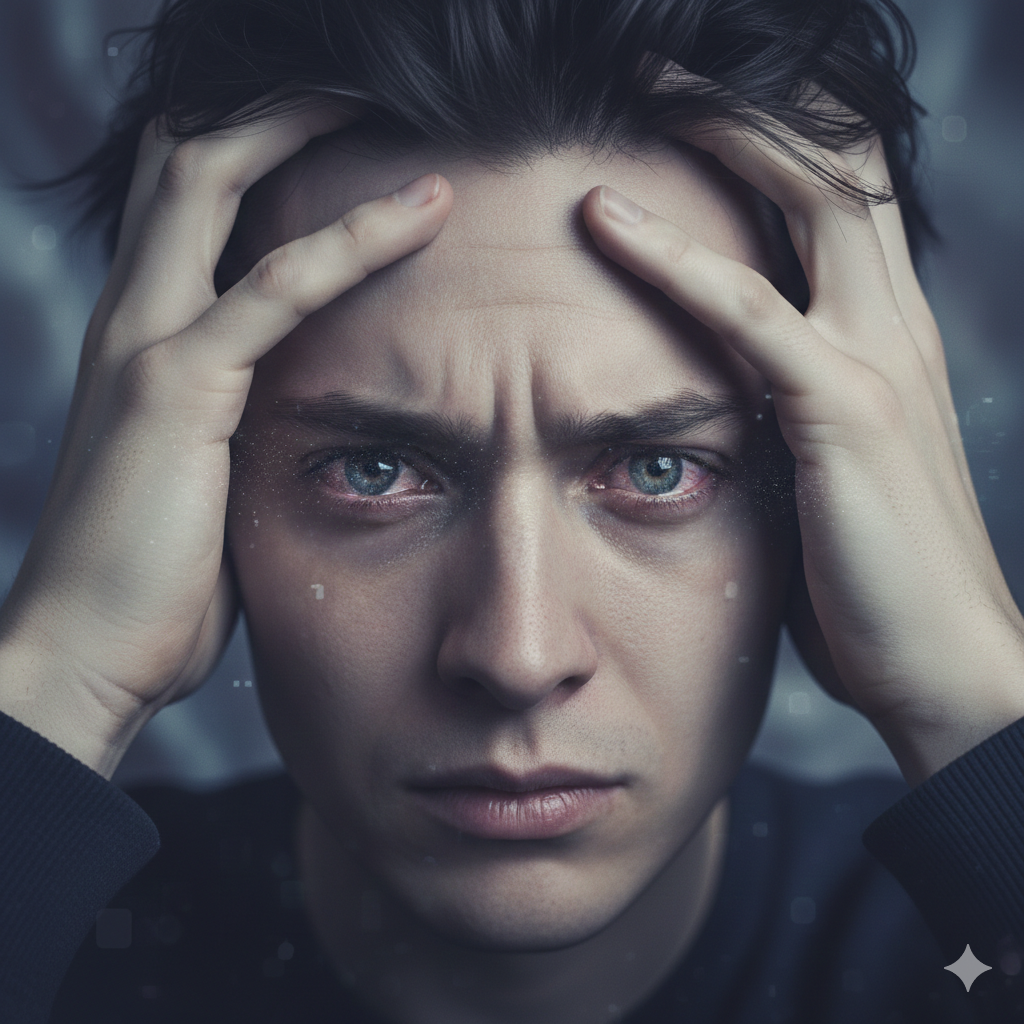
Have you ever noticed tiny “floaters,” a strange flickering, or a “static-like” haze in your vision when you’re overwhelmed? You check your eyes in the mirror, but they look perfectly clear. In 2026, as our visual demands reach an all-time high, Anxiety-Induced Visual Disturbance (sometimes linked to Visual Snow Syndrome) has become a common signal of a stressed nervous system.
When your mind is under heavy load, your brain’s “video processing unit” can start to glitch. Let’s explore the deep connection between your eyes and your anxiety, and how to clear the haze.
1. The 2026 Science: The Brain-Eye Connection
In 2026, we understand that the eyes are technically an extension of the brain. They are the only part of the central nervous system that is directly exposed to the outside world.
The Hyper-Vigilant Pupil
When anxiety strikes, your body triggers the Ocular Stress Response:
- Pupil Dilation: Anxiety makes your pupils widen to let in more light (preparing you to spot danger). However, this can make you hyper-sensitive to light and cause “glare.”
- Neural Noise: Stress increases the “electrical noise” in the visual cortex. Your brain starts to “see” its own internal activity, which manifests as tiny dots, flashes, or a graininess similar to an old television screen.
2. Common Symptoms of “Anxiety Vision”
In our hyper-digital 2026 environment, these symptoms are often exacerbated by screen fatigue:
- Visual Snow: A persistent graininess or “static” over your entire field of vision.
- Floaters & Flashes: Seeing tiny shapes or sudden sparks of light when moving your eyes quickly.
- Light Sensitivity (Photophobia): Feeling that normal room lighting or your smartphone screen is painfully bright.
- Tunnel Vision: A temporary loss of peripheral vision during a peak panic moment.
3. Why Anxiety Makes You See “Static”
The psychological driver behind this is Sensory Filtering Failure. Normally, your brain is excellent at filtering out “visual junk.” But when you are anxious, your brain’s filter weakens.
This is called Hyper-Awareness. Your brain becomes so focused on finding a “threat” that it starts reporting every minor floater or neural spark as a potential danger. This creates a cycle: the visual static causes anxiety, and the anxiety makes the static louder.
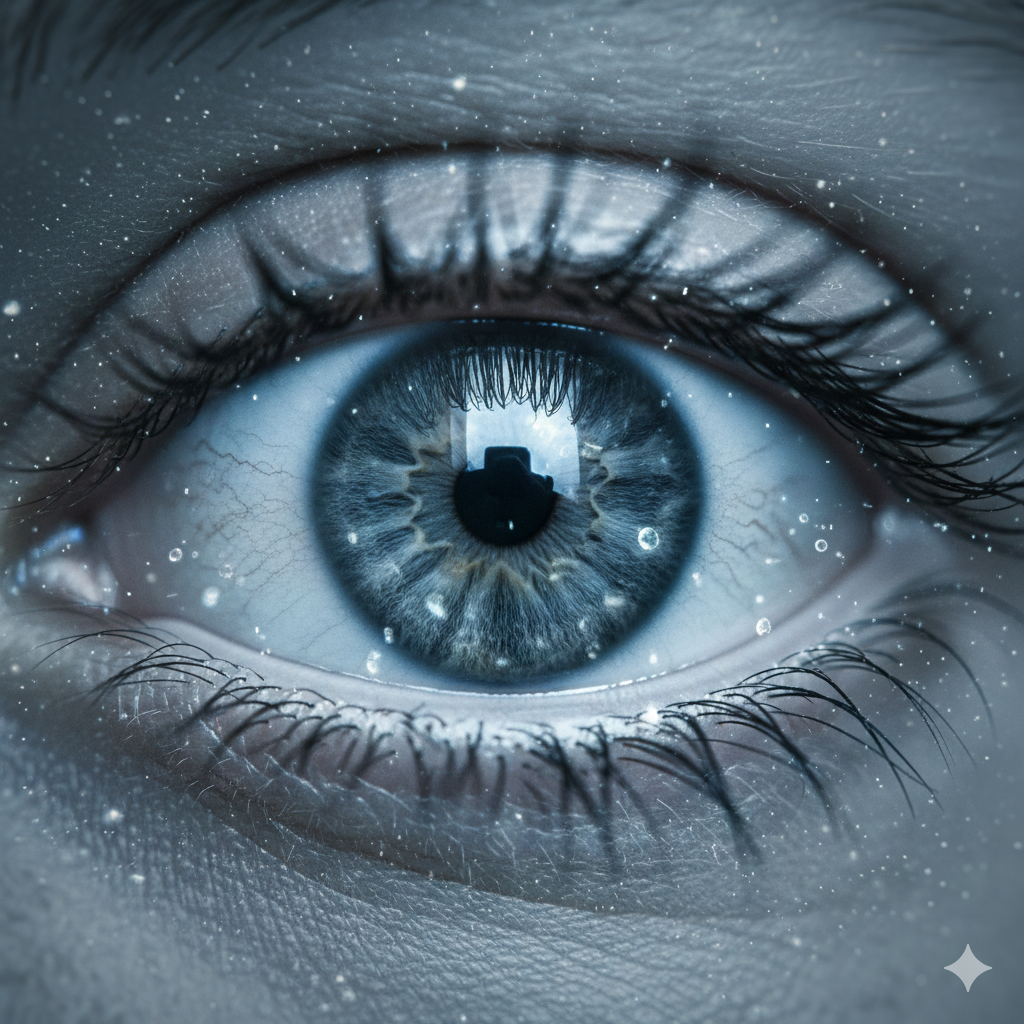
Anxiety-induced visual static can mimic visual snow symptoms, but it is not the same as a neurological diagnosis.
4. 2026 Solutions: How to Clear Your Visual Field
To calm your vision, you must calm the “processor” behind the eyes—your brain.
Immediate Visual Resets
- The “Palming” Technique: Rub your hands together to create heat, then cup them over your closed eyes for 2 minutes. The total darkness and warmth tell your visual cortex to “power down” and reset.
- The 20-20-20 Rule (2026 Edition): Every 20 minutes, look at something 20 feet away for 20 seconds, and blink 20 times. This re-lubricates the eye and breaks the “anxiety stare.”
- Blue Light Detox: In 2026, we use “warmth filters” on all devices. Reducing blue light intake directly lowers the stimulation of the Trigeminal nerve, which is linked to light sensitivity.
Long-Term Management
- Lutein & Zeaxanthin: These 2026 “super-nutrients” help protect the retina and have been shown to reduce visual fatigue in high-stress individuals.
- Grounding through Gaze: Practice “Panoramic Vision.” Intentionally soften your gaze and try to see the entire room at once without focusing on one spot. This switches the brain from “Alert Mode” to “Relax Mode.”
5. When to See an Eye Specialist or Therapist
While most visual “static” is benign and stress-related, it is vital to rule out physical issues. Consult a professional if:
- You see a sudden “curtain” or shadow falling over your vision.
- You have a sudden increase in floaters accompanied by a severe headache.
- Your vision changes are persistent even when you feel completely relaxed.
Frequently Asked Questions (FAQ)
Can anxiety cause blurred vision?
Yes. Stress causes the muscles around the eye to tighten, which can temporarily change the shape of the lens and cause slight blurring.
Is “Visual Snow” permanent?
For most people, it is a temporary symptom of high neural arousal. As the nervous system calms down, the “static” usually fades into the background.
Does 2026 “Neuro-Skincare” help the eyes?
Indirectly, yes. Cooling eye balms with peptides and caffeine reduce the physical tension around the eyes, which can lower the overall sensation of visual strain.
Conclusion
Your vision is a reflection of your internal peace. When the world looks “grainy” or “static,” it’s your brain’s way of asking for a digital and emotional detox. By practicing visual grounding and sensory rest, you can clear the haze and see the beauty of 2026 with clarity again.