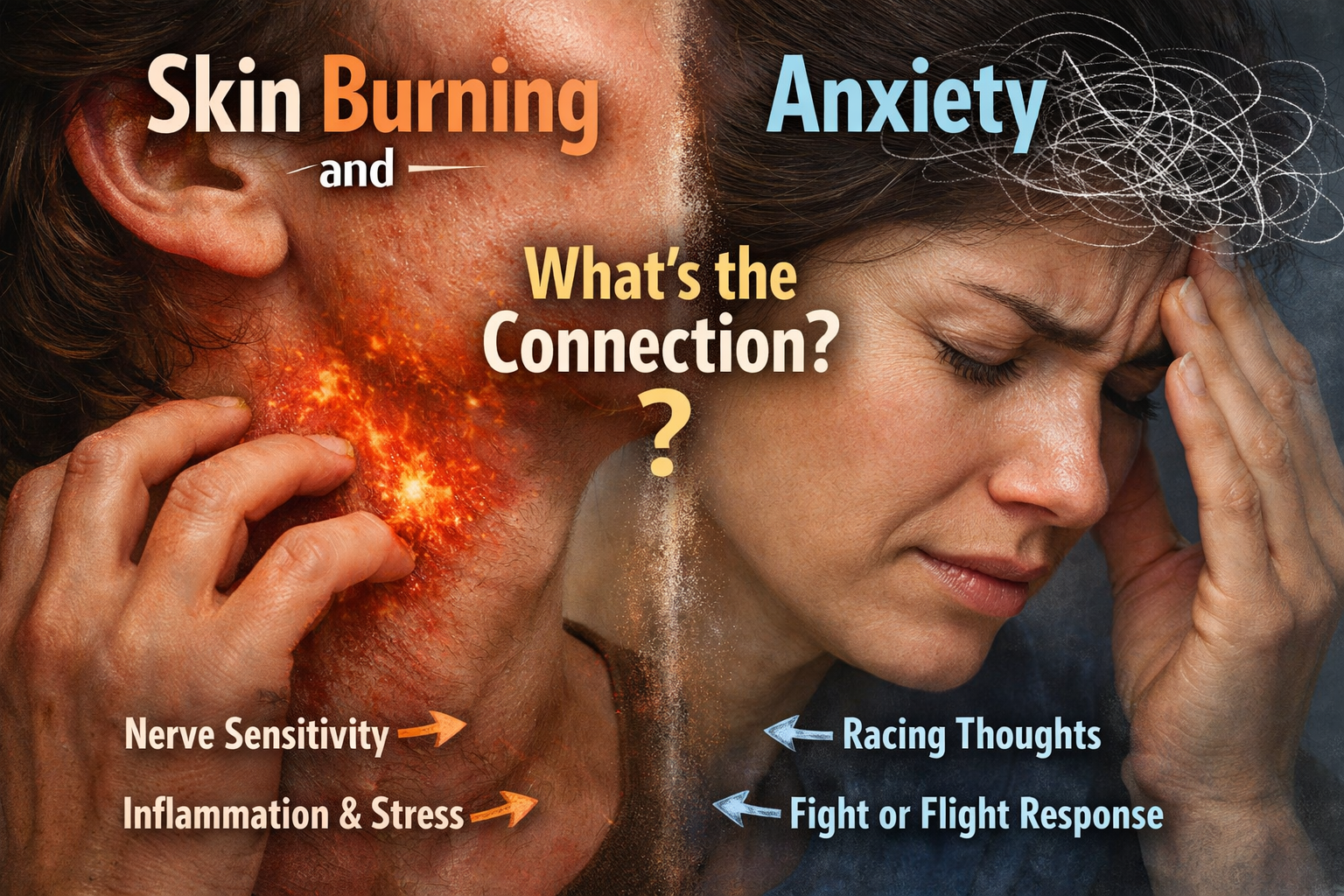
Have you ever felt a stinging or burning sensation on your skin, but you cannot find a physical cause? Understandably, this can feel very strange and even scary. In 2026, we now have a clear answer: your skin and your brain are deeply linked. Therefore, when your mind is under pressure, your skin can feel like it is on fire.
Fortunately, this sensation is usually harmless and manageable. In this guide, we will explore the biological connection between your nerves and anxiety to help you find peace.
1. The Science: Why Anxiety Feels Like Heat
To begin with, you should know that your nervous system controls everything you feel. However, during times of high stress, this system becomes hyper-sensitive. Specifically, your body enters a “high-alert” state.
The Adrenaline Rush
When you are anxious, your brain releases adrenaline and cortisol. As a result:
- Nerve Firing: Your nerves send sudden “pain” or “heat” signals to the brain, even without a real injury.
- Sensitive Sensors: Since your body is ready for danger, your skin’s receptors become too sensitive to touch or temperature.
- Blood Flow Changes: Because anxiety changes how blood moves through your body, your skin can feel hot or flushed in certain areas.
2. Common Signs of “Anxious Burning”
Generally speaking, a real burn stays in one place. In contrast, anxiety-related burning has specific behaviors. For instance, you might notice:
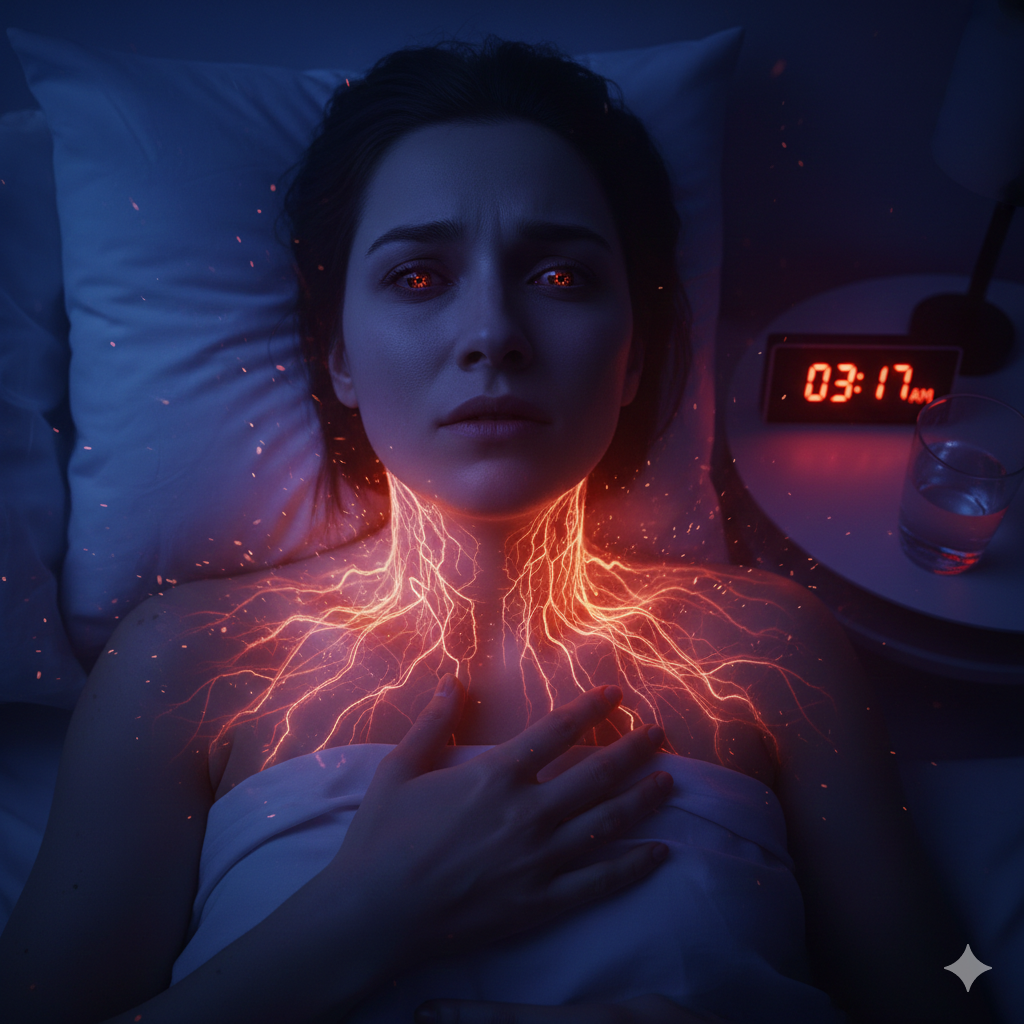
- The Migrating Heat: The burning feeling moves from your arms to your face or chest within minutes.
- The “Phantom” Nature: Your skin feels like it is burning, but it is cool to the touch and looks normal.
- Stress Timing: The sensation starts mainly when you are thinking about a problem or feeling overwhelmed.
3. How to Calm the “Nervous Burn”
The good news is that you can quiet these false signals. In fact, the best treatment is to calm the nervous system directly.
Immediate Cooling Steps
- Cold Water Reset: Instead of scratching, splash your face or hands with cold water. By doing this, you “shock” the nerves back into a normal state.
- Deep Breathing: By taking slow, deep breaths, you tell your brain that there is no danger. Consequently, the burning sensation often fades.
- Soft Textures: For the time being, avoid scratchy wool or tight clothes. Use soft cotton to reduce nerve irritation.
Long-Term Healing
- Magnesium Support: Since magnesium helps calm overactive nerves, it is a favorite 2026 supplement for skin health.
- Mindful Movement: Because exercise burns off extra adrenaline, a short walk can prevent the “buildup” of stress that leads to skin burning.
4. The 2026 Approach: “Bio-Feedback” for Skin
In addition to physical care, 2026 wellness trends focus on mental control. For example:
- The “Cooling” Visualization: By imagining your skin being covered in cool, blue water, you can actually lower the perceived intensity of the heat.
- Digital Detox: By stepping away from stressful news, you prevent the spikes in cortisol that set your skin “on fire.”
5. When to Call a Doctor
While anxiety is a common cause, sometimes burning skin needs medical attention. Consult a professional if:
- In addition to the burning, you have a visible rash, blisters, or swelling.
- The sensation is accompanied by numbness or muscle weakness.
- The burning is constant and does not change with your mood or stress levels.
FAQ: Quick Answers
Q: Can anxiety cause skin to sting like a bee? A: Yes. This is a common form of “Paresthesia” caused by an overactive nervous system during stress.
Q: Does stress-induced burning leave scars? A: Actually, no. Because the sensation is in the nerves and not a physical burn, it will not leave any marks on your skin.
Conclusion
To wrap up, the connection between skin burning and anxiety is a powerful example of the mind-body link. While it feels intense, it is simply your body’s way of communicating stress. By cooling your body and calming your mind, you can extinguish the fire. Remember, your skin is resilient, and you are in control.