
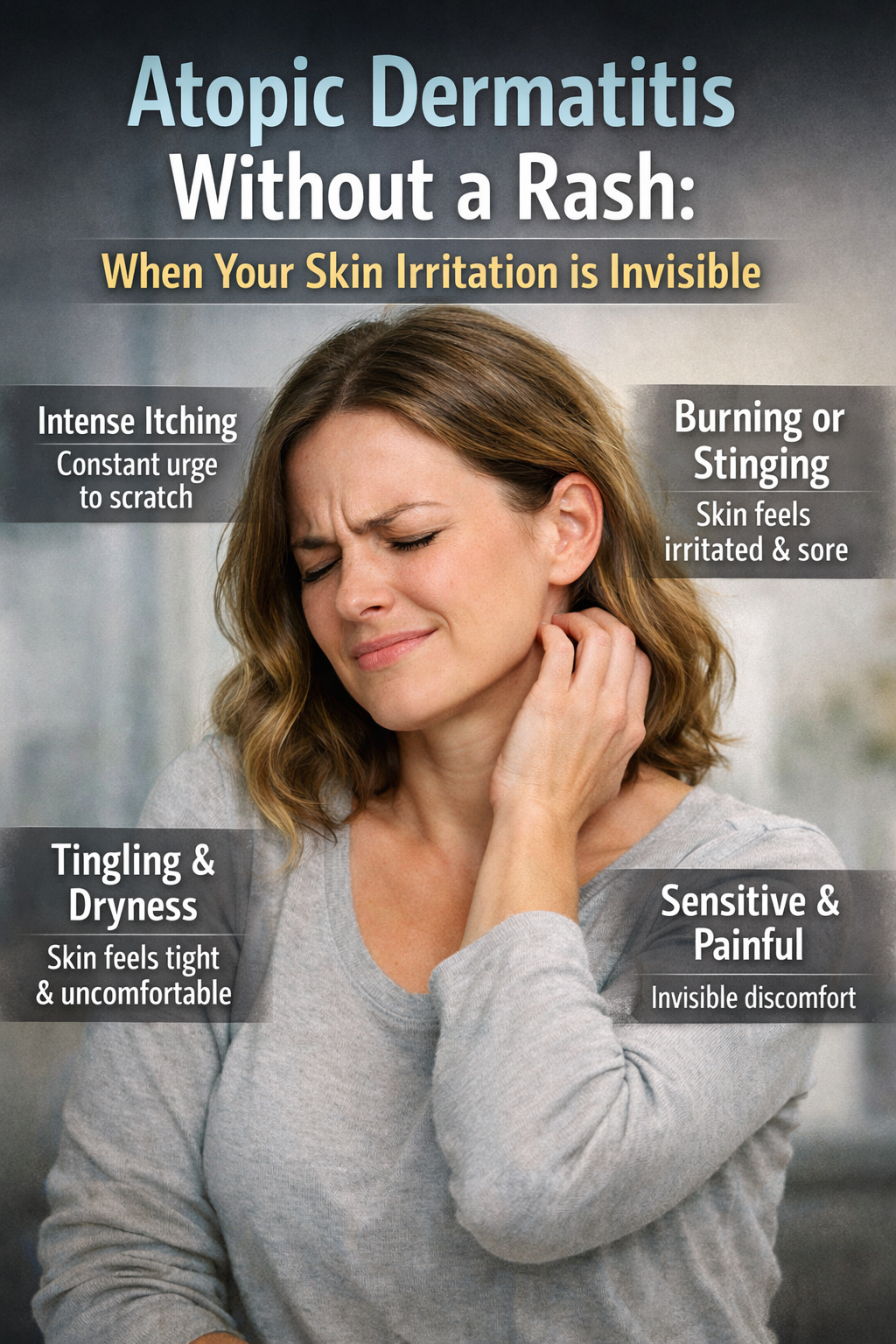
Have you ever felt an intense, persistent itch, yet your skin looks perfectly normal in the mirror? While most people associate eczema with red, scaly patches, 2026 dermatological research highlights a frustrating variation: Atopic Dermatitis (AD) without a visible rash. This condition, often called “subclinical inflammation,” means your skin is reacting deep beneath the surface.
Because you cannot see the irritation, you might feel dismissed or confused. However, your pain is real. In this guide, we will explore why your skin feels “angry” despite looking clear and how to silence the invisible itch today.
1. The Science: Why the Itch Precedes the Rash
In the past, doctors waited for a rash to diagnose eczema. Today, we understand that the “Itch-Scratch Cycle” often begins long before any redness appears. This happens because of two primary factors:
- Neural Hyper-sensitization: Your skin’s nerve fibers become overactive. Consequently, they send “itch” signals to your brain even though the skin barrier appears intact.
- Deep-Layer Inflammation: Although the top layer (epidermis) looks smooth, inflammatory cells are gathering in the deeper layers. Therefore, you feel the irritation internally before it “breaks” onto the surface.
- The Silent Barrier Defect: Your skin may be losing moisture at a microscopic level. As a result, the nerves become exposed to the air, leading to that biting, prickly sensation.
2. Spotting the Signs of “Invisible” Dermatitis
Since there is no redness to guide you, you must look for secondary clues. For instance, you might experience:
| Sign | Description |
| The “Phantom” Itch | A deep, crawling sensation that worsens at night or during rest. |
| Tactile Sensitivity | Suddenly, tags on clothing or light touches feel like sandpaper. |
| Temporary Wheals | Skin that turns white or slightly puffy only after you scratch it. |
| The “Hot” Skin Feel | Your skin feels warm to the touch, even without a fever or sun exposure. |
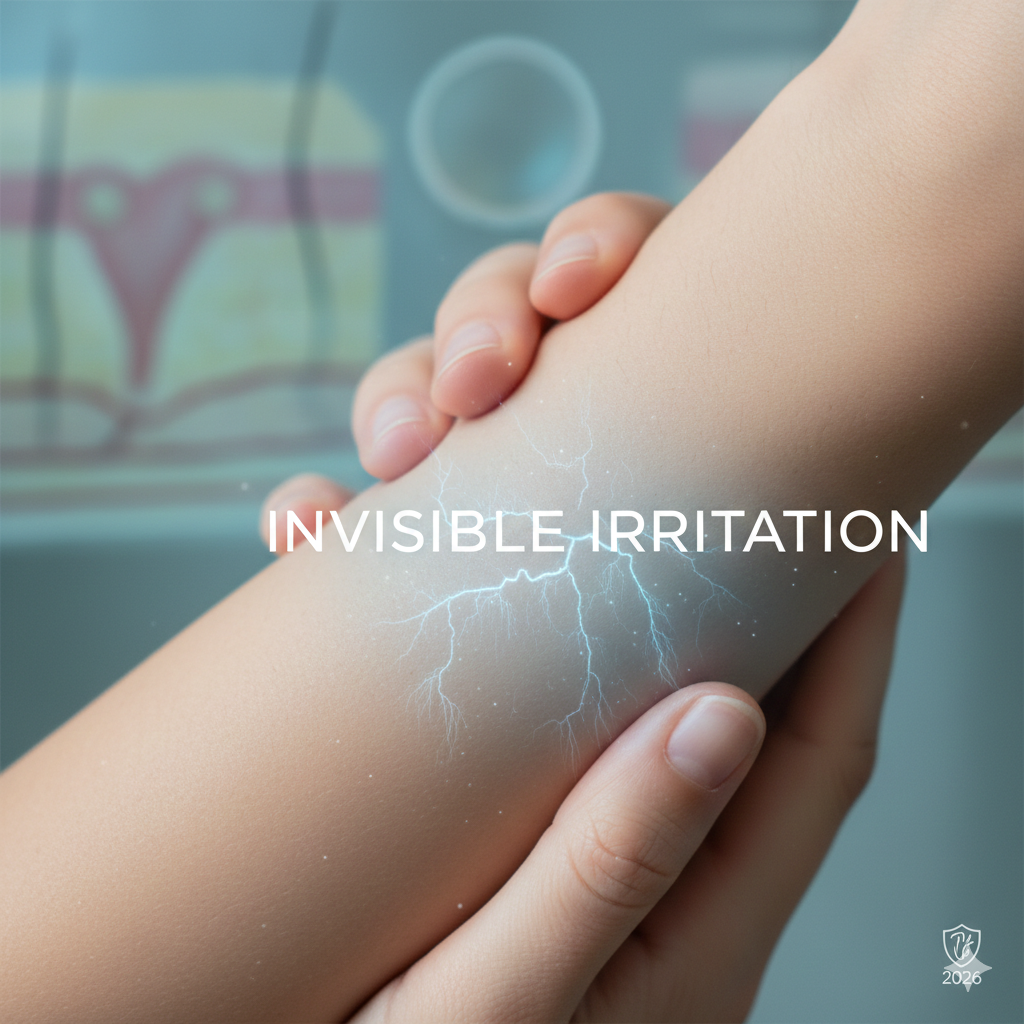
3. Immediate Relief: Calming the Invisible Fire
Fortunately, you do not have to wait for a rash to appear before you start treatment. In fact, early intervention can prevent a full-blown flare-up.
Sensory Cooling
- The 2026 “Cold-Wrap” Method: Dampen a soft cotton cloth with ice-cold water and wrap it around the itchy area for ten minutes. This physically slows down the nerve impulses.
- Ceramide-Rich Mists: Use a spray-on moisturizer containing ceramides. Because these molecules mimic your skin’s natural oils, they “seal” the microscopic cracks that trigger the itch.
Environmental Adjustments
- Humidity Control: Use a humidifier to keep your room at 45-50% humidity. Dry air is the number one trigger for invisible skin irritation.
- Ph-Balanced Cleansing: Switch to “syndet” (synthetic detergent) bars. Since regular soap is alkaline, it can irritate the hidden inflammation further.
4. 2026 Strategy: Strengthening the Skin-Nerve Connection
To find long-term comfort, you must treat the nerves and the skin barrier simultaneously. Consider these modern approaches:
- Topical Neuro-Soothers: Look for ingredients like palmitoylethanolamide (PEA). These are designed specifically to “turn off” the itch signal in the nerves.
- Anti-Inflammatory Nutrition: Increasing your intake of antioxidants can help dampen the systemic inflammation that fuels the invisible itch.
- Stress Management: Because the brain and skin are linked, high stress can trigger a “neurogenic itch.” Therefore, practicing daily relaxation is a medical necessity, not just a luxury.
5. When to See a Specialist
Even if your skin looks clear, you should consult a dermatologist if:
- The itch prevents you from sleeping for more than three nights a week.
- The sensation is localized to one specific nerve path (which could indicate shingles or a pinched nerve).
- You notice any swelling in your lymph nodes along with the skin irritation.
Conclusion
To wrap up, atopic dermatitis without a rash is a common yet misunderstood experience. While the irritation is invisible to others, the discomfort is undeniably significant. By focusing on deep hydration and nerve-calming techniques, you can regain control of your comfort. Remember: you don’t need a visible rash to deserve relief.