Have you ever noticed that the week before a major presentation, a difficult exam, or a stressful life event, your skin suddenly rebels? You might experience an unexpected cystic breakout, a flare-up of eczema, sudden hives, or a frustrating, crawling sensation. For decades, the beauty industry treated these issues purely topically—with harsh acids, thick creams, and drying lotions. But as we navigate through 2026, the science of psychodermatology has proven what many of us have always suspected: your skin is a direct reflection of your nervous system.
Welcome to the era of the mind-skin connection. Today, dermatologists and neuroscientists are converging on a single, powerful anatomical structure to treat “anxious skin” from the inside out: the Vagus Nerve.
In this comprehensive guide, we will dive deep into the science of anxious skin, explore the profound power of the vagus nerve, and provide you with actionable, science-backed vagus nerve stimulation (VNS) techniques to heal your skin barrier, reduce redness, and reclaim your glow.
What is “Anxious Skin”?
Before we can understand the cure, we must understand the condition. “Anxious skin” is not an official dermatological diagnosis, but rather a blanket term for the physiological changes that occur in the skin when the body is under chronic psychological stress.
When your brain perceives a threat (whether it is a literal physical danger or just a looming deadline), it activates the sympathetic nervous system—your “fight or flight” response. The adrenal glands release a cascade of stress hormones, primarily cortisol and adrenaline.
The Cortisol Effect on the Epidermis
Cortisol is incredibly damaging to the skin when present in high amounts over long periods. Here is what happens during a stress cascade:
- Barrier Breakdown: Cortisol slows down the production of beneficial lipids (ceramides), weakening the skin barrier and leading to trans-epidermal water loss (TEWL). Skin becomes dry, flaky, and highly reactive to external irritants.
- Inflammation and Redness: Stress triggers the release of neuropeptides and pro-inflammatory cytokines in the skin. This exacerbates conditions like rosacea, psoriasis, and eczema.
- Oil Overdrive: In the sebaceous glands, cortisol binds to receptors that signal the overproduction of sebum (oil), creating the perfect storm for stress acne.
- Neurological Sensations: As discussed in our guide on How to Stop the Skin Crawling Feeling: Relief for Anxiety Tingles, a hyperactive nervous system can cause the nerve endings in your skin to misfire, leading to tingling, itching (pruritus), and burning sensations without any visible rash.
To fix anxious skin, you cannot simply apply a topical serum; you must turn off the “fight or flight” alarm in the brain. This is where the vagus nerve comes in.
Meet the Vagus Nerve: The Captain of Calm
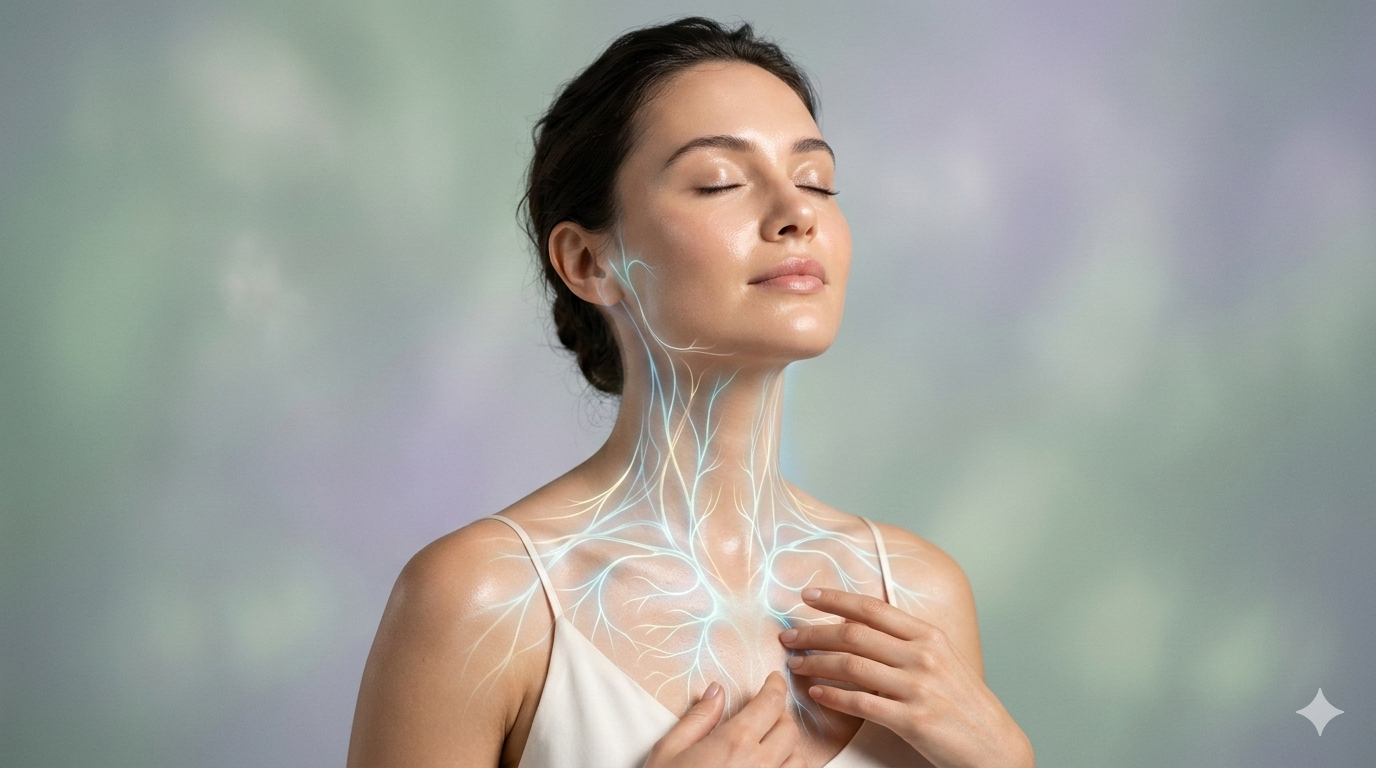
The vagus nerve (from the Latin word vagus, meaning “wanderer”) is the longest and most complex of the cranial nerves. Originating in the brainstem, it wanders down through the neck, into the chest, and wraps around the digestive tract and other major organs.
It acts as the superhighway of the parasympathetic nervous system—the “rest and digest” or “tend and befriend” mode. When the vagus nerve is activated, it releases an anti-stress neurotransmitter called acetylcholine. This chemical acts like a biological brake pedal, rapidly slowing down heart rate, lowering blood pressure, and, crucially, halting the systemic inflammation that causes skin flare-ups. Cleveland Clinic’s Guide to the Vagus Nerve
Vagal Tone and Skin Health
“Vagal tone” refers to the strength and efficiency of your vagus nerve. People with high vagal tone can experience a stressful event and quickly return to a state of calm. People with low vagal tone remain stuck in a state of low-grade, chronic stress. In 2026, research in the National Library of Medicine (NIH) continually highlights that individuals with chronic inflammatory skin conditions (like atopic dermatitis and severe acne) often display markedly low vagal tone.
The Gut-Brain-Skin Axis: How the Vagus Nerve Connects Them All
To truly understand why stimulating the vagus nerve clears up your complexion, we must look at the Gut-Brain-Skin Axis.
The vagus nerve is the primary communication line between the gut microbiome and the brain. Chronic stress impairs gut motility and alters the balance of gut bacteria, leading to intestinal permeability (leaky gut). When endotoxins leak from the gut into the bloodstream, they trigger systemic inflammation that travels straight to the skin, manifesting as acne or eczema.
By stimulating the vagus nerve, you:
- Improve gut motility and digestion.
- Foster a healthier gut microbiome.
- Reduce systemic inflammation at the source.
- Lower cortisol levels, thereby reducing excess sebum production and preserving the skin barrier.
(Curious about topical ways to balance your skin’s ecosystem? Read our deep dive into the Best Microbiome-Friendly Skincare Products for Reactive Skin.)
7 Ways to Stimulate Your Vagus Nerve for Clearer, Calmer Skin
You do not need an expensive medical device to reap the benefits of Vagus Nerve Stimulation (VNS). Because the nerve runs through the face, neck, and chest, there are several highly effective, free, at-home techniques you can integrate into your daily wellness routine.
1. Cold Exposure Therapy (The Ice Roller Method)
Cold water therapy is one of the fastest, most effective ways to shock the vagus nerve into action. The sudden drop in temperature activates the mammalian dive reflex, instantly lowering heart rate and signaling the parasympathetic nervous system to take over.
- How it helps the skin: Cold therapy immediately constricts blood vessels, dramatically reducing facial redness, puffiness, and the inflammation associated with cystic acne and rosacea.
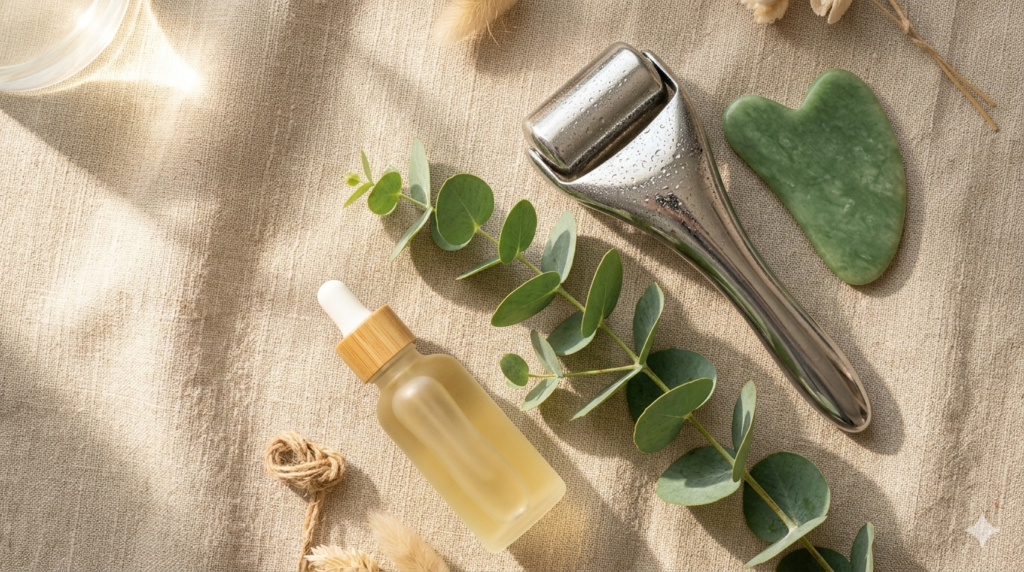
- The Technique: You don’t need a full ice bath. Simply splashing ice-cold water on your face for 30 seconds every morning works wonders. Alternatively, use a frozen stainless steel ice roller. Roll it across your forehead, down your cheeks, and—most importantly—down the sides of your neck where the vagus nerve runs.
2. Deep Diaphragmatic Breathing and Physiological Sighs
The way you breathe directly dictates the state of your nervous system. Shallow, rapid chest breathing signals panic. Slow, deep, belly breathing signals safety.
- How it helps the skin: By lowering cortisol through breathwork, you protect your skin’s collagen from degrading and prevent stress-induced sebum overproduction.
- The Technique: Try the “Physiological Sigh,” a breathing pattern scientifically proven to rapidly reduce autonomic stress. Inhale deeply through your nose until your lungs are almost full, then take one more quick “top-off” inhale. Slowly and fully exhale through your mouth. Repeat this 3 to 5 times while doing your morning or evening skincare routine.
3. Vocal Cord Stimulation (Humming, Singing, and Gargling)
The vagus nerve is directly connected to your vocal cords and the muscles at the back of your throat. Activating these muscles sends stimulating vibrations down the vagal pathway.
- How it helps the skin: Lowering systemic anxiety prevents the release of substance P (a neuropeptide that triggers itching and hives in the skin).
- The Technique: Sing loudly in the shower, hum a low-frequency tune while applying your moisturizer, or gargle water forcefully for 30 seconds after brushing your teeth. It sounds incredibly simple, but the neurological payoff is massive.
4. Auricular (Ear) Massage
A specific branch of the vagus nerve, called the auricular branch, reaches the surface of the skin in the outer ear. This is the only place on the human body where the vagus nerve can be directly stimulated through the skin.
- How it helps the skin: Reduces the psychological stress that leads to skin picking (excoriation disorder) and helps regulate the gut-skin axis.
- The Technique: Using a face oil or a rich ceramide cream, take your index fingers and gently massage the concha of your ear (the hollow bowl-like part just outside the ear canal). Use slow, circular motions for two to three minutes. You may notice your mouth watering or a desire to yawn—both are signs that the parasympathetic nervous system is activating.
5. Lymphatic Facial Massage and Gua Sha
Gua Sha is more than just a 2026 beauty trend for sculpting the jawline; it is a profound tool for nervous system regulation. Gentle, rhythmic strokes on the face and neck stimulate mechanoreceptors in the skin, which send calming signals via the vagus nerve to the brain.
- How it helps the skin: Promotes lymphatic drainage, removes cellular waste, and reduces fluid retention, all while putting the brain in a deeply relaxed state to aid in overnight cellular turnover.
- The Technique: Apply a slip-heavy facial oil. Using a Gua Sha stone or your knuckles, gently sweep from the center of your face outward. Pay special attention to sweeping down the sides of the neck to stimulate the vagal pathways and drain lymph fluid toward the collarbones.
6. Wearable VNS Technology in 2026
For those who want a high-tech approach, 2026 has seen a boom in wearable neuro-technology. Devices that clip onto the tragus of the ear or rest on the chest use gentle transcutaneous electrical nerve stimulation (tENS) to activate the vagus nerve. While originally designed for depression and anxiety, many users report secondary benefits of cleared acne and reduced eczema flare-ups due to normalized cortisol levels.
7. Integrating “Neuro-Cosmetics”
The skincare industry has caught up with neuroscience. Modern “neuro-cosmetics” are formulated with ingredients that interact locally with the skin’s nervous system. When combined with vagus nerve stimulation, these topical treatments offer a holistic cure for anxious skin. Look for ingredients like:
- Palmitoylethanolamide (PEA): Down-regulates skin mast cells to stop itching and redness.
- Adaptogens (Ashwagandha, Reishi): When applied topically, they help the skin resist environmental stressors.
- Cannabidiol (CBD) and Ectoin: Powerful anti-inflammatories that soothe localized nerve endings.
(For a detailed breakdown of these ingredients, check out our guide on The Best Over-the-Counter Creams for Sensitive, Tingling Skin.)
Building a “Vagal Toning” Skincare Routine
To truly transform anxious skin, you must bridge the gap between your topical products and your internal state. Here is what a vagal-toning evening routine looks like:
- Set the Environment: Dim the lights in your bathroom. Bright overhead lights stimulate cortisol.
- Double Cleanse with Breathwork: As you massage your cleansing balm into your skin, perform four cycles of the physiological sigh. Focus on the sensation of your hands on your face.
- Vocal Stimulation: Gargle water for 30 seconds after brushing your teeth.
- Ear & Neck Massage: Apply your night cream or facial oil. Spend two minutes gently massaging the hollows of your ears and sweeping your hands down the sides of your neck.
- Sleep: The ultimate vagus nerve stimulator. Prioritize 7-9 hours of sleep in a cool room to allow your skin barrier to repair itself.
Frequently Asked Questions (FAQ)
Can anxiety alone cause acne and eczema?
While anxiety might not be the sole cause (genetics and environment play a role), it is a massive trigger. Anxiety spikes cortisol, which increases oil production and creates a pro-inflammatory environment, turning minor skin issues into severe flare-ups. To understand more about stress management, visit the American Psychological Association (APA).
How long does it take for Vagus Nerve Stimulation to improve skin?
You can feel the calming neurological effects of VNS (like lowered heart rate) within minutes. However, because the skin operates on a 28-day turnover cycle, it typically takes 3 to 4 weeks of consistent vagus nerve practices to see a visible reduction in acne, eczema, or chronic redness.
Are there any dietary ways to stimulate the vagus nerve for skin health?
Yes! Omega-3 fatty acids (found in salmon, chia seeds, and walnuts) are proven to increase vagal tone and reduce skin inflammation. Additionally, eating probiotic-rich foods (kimchi, kefir, sauerkraut) strengthens the gut microbiome, which communicates directly with the vagus nerve to reduce systemic inflammation.
Is it safe to use ice rolling on rosacea-prone skin?
For some, ice rolling is a miracle for rosacea as it constricts blood vessels and reduces heat. However, extreme cold can be a trigger for highly reactive rosacea. If you have rosacea, avoid direct ice-to-skin contact. Instead, use a chilled (not frozen) jade roller or simply splash cool water on your face.
Conclusion: Healing from the Inside Out
As we embrace the wellness and skincare innovations of 2026, the message is clear: you cannot wage war on your skin and expect it to heal. Your skin is intimately connected to your brain, acting as a visible monitor of your internal stress levels.
By understanding the power of the vagus nerve, you gain a remarkable tool for your skincare arsenal. Incorporating simple, daily practices like cold therapy, deep breathing, and mindful facial massage can shift your body out of “fight or flight” and into “rest and repair.” When you soothe your nervous system, you give your anxious skin the permission and the biological environment it needs to finally heal, clear up, and glow.
Take a deep breath. Your skin is listening.