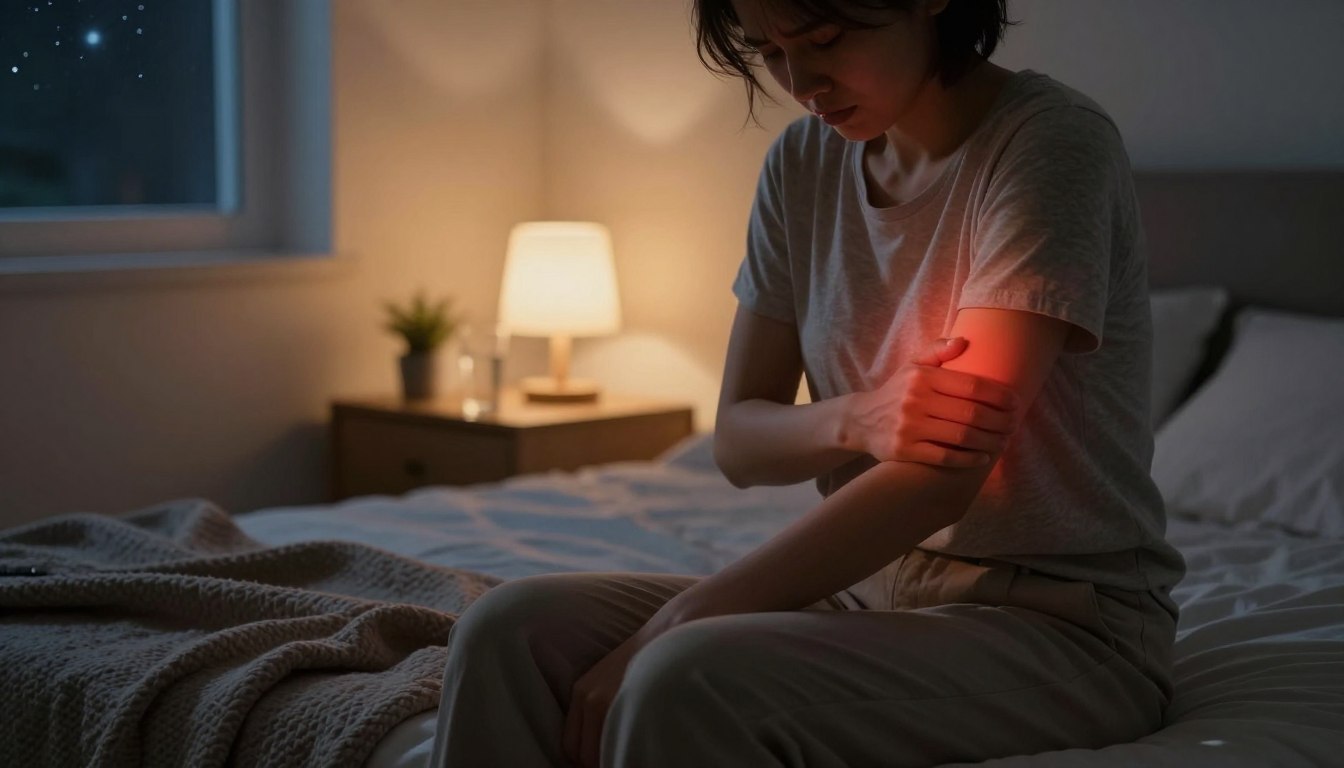
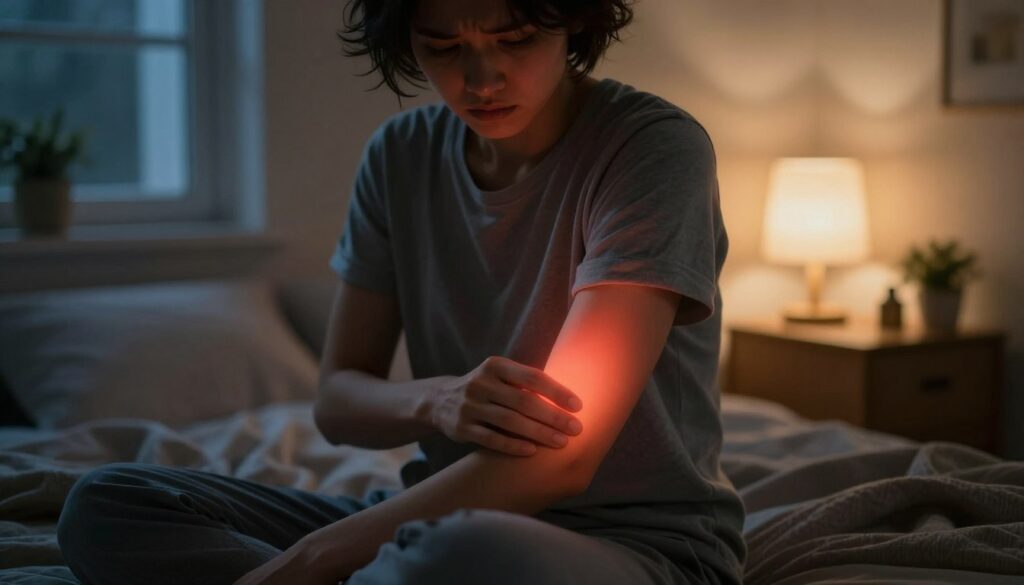
Doctors report that many patients wake up with a burning skin sensation. This can be due to many reasons. It might be because of changes in body temperature or hormones. Or it could be because of skin problems, allergies, or even tiny bugs.
Some people have conditions like eczema or psoriasis. These can make the skin feel hot and itchy at night. I tell them how these issues can make their skin feel worse after dark.
When we sleep, our body tries to cool down. It does this by sending heat out through our skin. This, along with changes in hormones and other things, can make our skin itch more at night.
Some skin problems make this worse. For example, if the skin loses moisture or if someone has atopic dermatitis, it can feel like it’s burning.
Psoriasis can cause scaly, inflamed patches that burn at night. Allergies to soaps or cosmetics can also make the skin worse after dark. Even tiny bugs like scabies or bed bugs can cause problems.
Neurological issues can also cause burning. For example, if nerves are damaged, it can feel like sharp burning in certain areas.
Things around us can also affect our skin. Too much heat in the bedroom, low humidity, or using hot showers can make skin burning worse. Even stress and anxiety can make itchiness feel worse.
Key Takeaways
- Burning skin sensation at night often reflects normal night physiology plus skin or nerve disease.
- Nighttime skin burning increases with low evening cortisol, cytokine shifts, and nocturnal moisture loss.
- Common causes include eczema, psoriasis, allergic reactions, scabies, and peripheral neuropathy.
- Simple fixes—cooling, fragrance-free ceramide moisturizers, humidifiers, and stress techniques—can help immediately.
- See a dermatologist or neurologist if symptoms persist, worsen, or come with fever, numbness, or systemic signs.
Burning Skin Sensation at Night: Causes and What Helps
I look into why skin might feel hot or burn at night. In my experience, This can happen for many reasons, I’ve noticed. Not everyone realizes that It’s often a mix of our body’s natural processes, skin problems, illnesses, our environment, and how we behave.
How circadian rhythm and body temperature drive nighttime symptoms
Our body’s internal clock changes how we feel at night. It makes our body temperature go down, which can make our skin itch and burn. This is because our body loses heat through the skin more at night.
When it gets dark, our body makes less of a hormone called cortisol. This hormone helps keep our skin calm. Without enough, our skin can get irritated more easily.
Our body’s immune system also gets stronger at night for some people. This is why conditions like atopic dermatitis can get worse when we try to sleep.
Our skin loses more moisture at night, making small problems feel bigger. This can make us wake up a lot because our skin is so sensitive.
Common dermatologic and parasitic causes
Atopic dermatitis is a big problem for many people. It makes their skin itch and burn, especially at night. Using special creams and taking care of their skin can help.
Psoriasis can make your skin scaly and itchy, and sometimes it burns a lot. Lichen planus causes flat, itchy spots that can wake you up. Rashes from things like makeup or cleaning products can also itch more at night.
Parasites like bed bugs and scabies mites are active at night. They can make you itch a lot. Body lice or pinworms can also cause itching in certain areas.
Systemic medical conditions and neurologic causes
Some diseases can make your skin feel hot or burn. Diabetes can cause nerve damage that makes your skin feel like it’s on fire. Kidney disease, liver problems, and some autoimmune diseases can also make your skin itch or burn.
Certain cancers and treatments for cancer can make you itch a lot. Small-fiber neuropathy and other conditions can make your skin feel like it’s burning or tingling.
“Doctors report that many patients had burning skin every night for months. Her exams were normal until we discovered severe iron deficiency. After treatment, symptoms improved within weeks.”
Seeing a doctor right away is important if you have fever, lose a lot of weight, have trouble with your urine, or if you notice numbness or weakness.
Hormonal, nutritional, environmental, and psychological contributors
Changes in hormones can affect your skin. Menopause and pregnancy can make your skin dry and itchy. This is because your body is changing.
Not having enough vitamin D or B vitamins can make your skin itch. Taking supplements can help some people with eczema.
Things like too much heat in your bedroom, dry air, and certain fabrics can make your skin itch. So can taking hot showers or using harsh soaps. Stress and anxiety can also make you itch more at night.
Nighttime skin burning: Practical remedies, home strategies, and medical treatments
In practice, this is something many people don’t expect wake up with sharp heat or itchy skin. I start with simple steps to help them. These steps help with nighttime discomfort and fast relief.
Immediate and at-home relief strategies
I tell them to use cool compresses for a few minutes. This helps with burning and swelling. A lukewarm oatmeal bath before bed also helps calm the skin.
Moisturizing right after bathing is key. Use fragrance-free creams to repair the skin. Wear cotton sleepwear and keep the room cool and humid.
Nighttime cotton gloves stop scratching and help creams work better. Drinking water and using gentle cleansers also helps. Avoid harsh detergents in laundry.
Over-the-counter and supplemental options
For short-term swelling, I recommend OTC hydrocortisone 1%. For itch at night, sedating antihistamines like diphenhydramine can help. But non-drowsy ones are not as good at night.
Melatonin can help with sleep and itch. Some try valerian or GABA for anxiety. But always talk to a doctor first. Fixing vitamin D or B deficiencies and adding omega-3s can also help.
When to seek medical care and clinical treatments
If symptoms last more than two weeks or get worse, see a doctor. Look for signs like fever, weight loss, or numbness. You might need to see a dermatologist or neurologist.
Doctors can prescribe stronger creams or sedating antidepressants for itch. For severe cases, biologics or immunomodulators might be needed. Always follow the doctor’s advice.
Treat underlying causes like diabetes or scabies. Quick action for infections is key. This helps prevent serious problems and keeps the skin feeling better.
Conclusion
At night, our skin can feel hot and itchy. This is because our body’s temperature changes and our hormones shift. It can also be due to skin problems like eczema or psoriasis.
Other reasons include parasites, diseases like diabetes, and even some cancers. Hormonal changes, like those in menopause, can also cause it. So can nerve problems.
Things around us can make it worse. Like when it’s hot or dry outside. Wearing rough clothes or not getting enough vitamin D can also hurt.
Feeling stressed or anxious can make it feel even worse. Knowing what causes it helps us find ways to stop it.
First, try using cool packs or special creams. Make your bedroom cool and use soft clothes. Avoid hot baths and harsh soaps.
For quick relief, try over-the-counter creams or special supplements. Melatonin can help you sleep better and feel less burning.
If it doesn’t get better, see a doctor fast. They can give you stronger treatments. This can help you sleep better and feel less burning.