
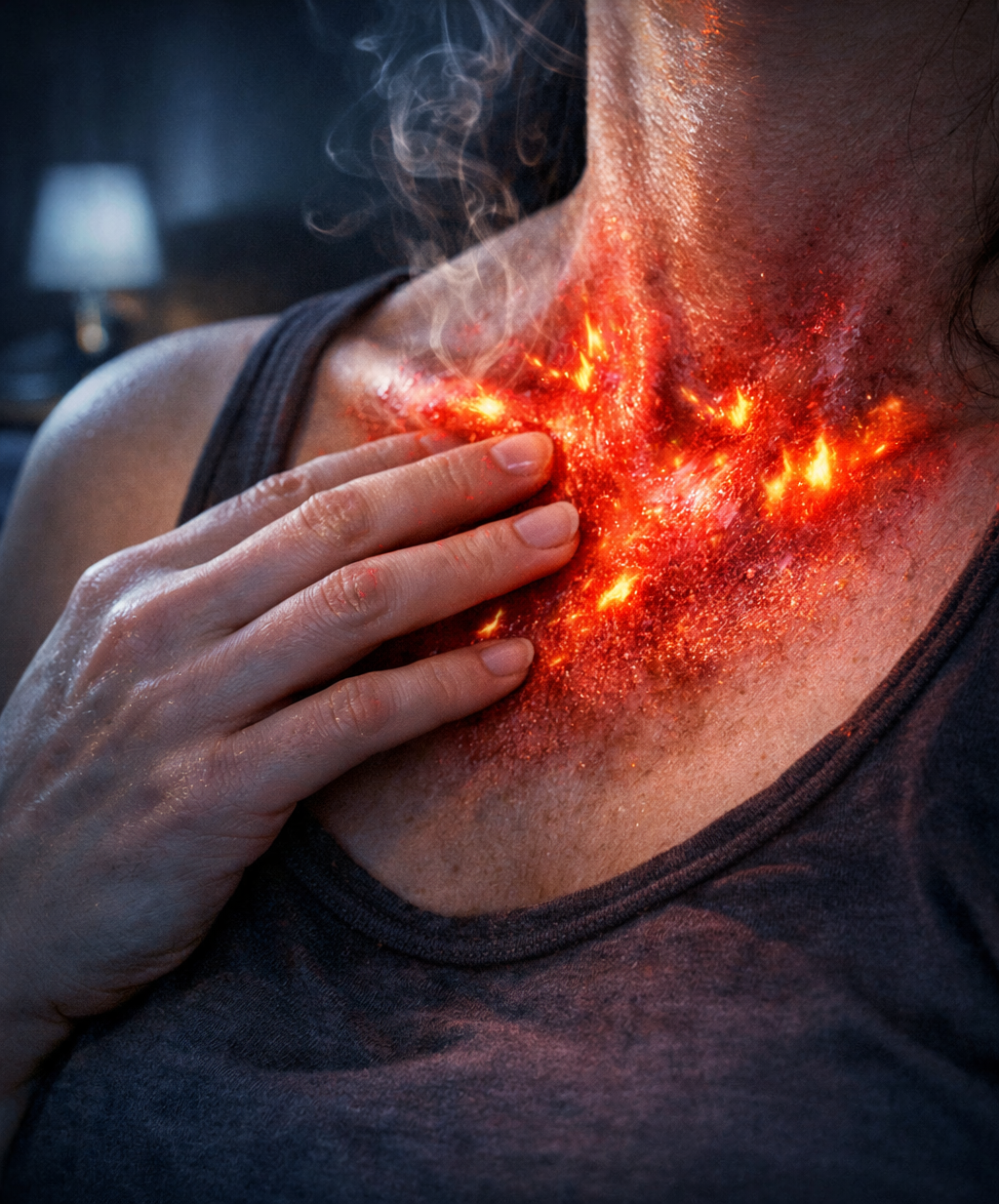
Have you ever tried to fall asleep, only to feel a strange, burning heat spreading across your skin? Understandably, this sensation can be very alarming, especially when there is no visible sunburn or rash. In 2026, we now recognize that this “Burning Skin” feeling is a frequent messenger of a stressed nervous system. Therefore, if your skin feels hot but is cool to the touch, your brain might be sending a false alarm.
Fortunately, understanding why this happens can help you cool down your nerves and your skin. In this guide, we will explain the science of “Anxiety Burning” and provide 2026 tips to help you sleep peacefully.
1. The Science: Why Stress Feels Like Heat
To begin with, you must understand that your nerves are the “electrical wires” of your body. However, high anxiety can cause these wires to “short circuit.” Specifically, your body’s stress response can mimic the sensation of heat.
The Nerve-Signal Glitch
When you are under long-term pressure, your body stays in “Fight or Flight” mode. As a result:
- Sensory Overload: Your brain misinterprets normal nerve signals as “burning” or “stinging.”
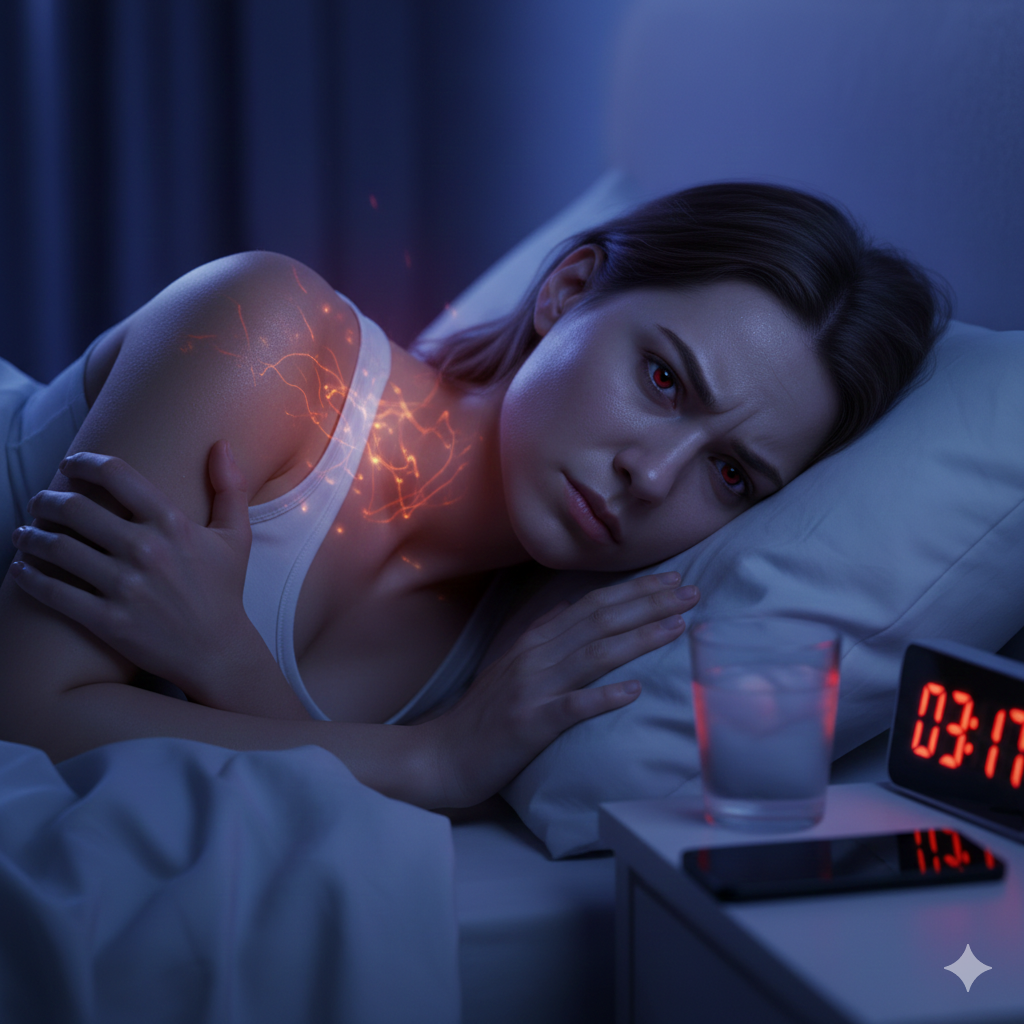
- Blood Flow Shifts: Since stress affects your circulation, tiny blood vessels can dilate rapidly, creating a localized feeling of warmth.
- The Cytokine Surge: Because anxiety triggers inflammatory chemicals, your skin can feel inflamed even without a physical wound.
2. Why Does It Happen Mainly at Night?
Generally speaking, we are too busy during the day to notice minor nerve tingles. In contrast, nighttime brings silence. For instance, you might notice the burning more because:
- The Sensory Vacuum: There are no distractions to pull your brain’s focus away from your skin.
- Cortisol Drops: Usually, your body’s natural anti-inflammatory hormones drop at night, making sensations feel more intense.
- The Worry Loop: Once you start worrying about the burning, your anxiety rises, which consequently makes the burning feel even hotter.
3. 2026 Solutions: How to Cool the Fire
The good news is that you can “reset” your nerves before bed. In fact, cooling the skin and the mind together is the most effective strategy.
Immediate Cooling Steps
- The “Thermal Reset”: Instead of a hot shower, use lukewarm water. By lowering your skin’s surface temperature, you quiet the overactive nerves.
- Magnesium Sleep Gels: Regularly applying a cooling magnesium gel can help stabilize nerve firing and relax the muscles underneath.
- Cotton Linens: For the time being, switch to 100% organic cotton or bamboo sheets to allow your skin to breathe.
Mental Cooling
- The “Cool Air” Breath: Since heat is the problem, imagine breathing in cold, blue air. By focusing on this visualization, you can actually lower your perceived pain levels.
- Progressive Relaxation: Because tension feeds the burning sensation, try tensing and then releasing your muscles from toe to head.
4. Strengthening the Mind-Skin Barrier
In addition to quick fixes, 2026 wellness focuses on long-term nerve health. For example:
- B-Complex Vitamins: Since B vitamins protect the “insulation” of your nerves, they are vital for preventing phantom burning.
- Digital Sunset: By avoiding stressful news or work emails 2 hours before bed, you prevent the late-night cortisol spike.
5. When to Consult a Professional
While anxiety is a common cause, sometimes burning skin can be a sign of a medical condition. Consult a doctor if:
- In addition to the burning, you feel weakness in your muscles or have trouble walking.
- The burning is localized to a specific “stripe” on one side of your body.
- You have a history of diabetes or vitamin deficiencies.
FAQ: Quick Answers
Q: Can anxiety cause skin to feel hot to the touch? A: Usually, no. If the skin is actually hot and red, it might be an infection. If it feels hot but is cool to the touch, it is likely nerve-related (anxiety).
Q: Does ice help? A: Actually, extreme ice can shock the nerves and make the burning worse later. Instead, use a cool, damp cloth for a gentler effect.
Conclusion
To wrap up, a burning skin sensation at night is often a sign that your nervous system is “overheated.” While it feels scary, it is a manageable symptom of stress. By cooling your environment and calming your thoughts, you can reclaim your sleep. Remember, your skin is safe—it just needs you to turn down the internal volume.