Ever felt a sudden sting or warmth on your skin when stressed? Wondered if your body is just reacting or if something deeper is going on?
The skin does more than just cover us. It’s full of nerve endings, immune cells, and blood vessels. These parts respond to our emotions and the world around us. Feeling embarrassed, nervous, or stressed can make our skin flush, sweat, itch, and feel more sensitive.
Stress makes our body release special hormones like cortisol and adrenaline. These hormones change how our skin works. They can make our skin feel like it’s burning, especially for those who feel anxious.
When we feel stressed for a long time, our skin can get worse. This is because our body’s stress response is always on. It can slow down how our skin heals, make it more inflamed, and even make conditions like rosacea or eczema worse.
Seeing skin burning and anxiety as connected changes how we view these feelings. It shows that these sensations are real signs from our body. By understanding this, we can take steps to feel better. This includes calming routines, skincare that helps repair our skin, and finding ways to reduce stress.
Key Takeaways
- Skin burning and anxiety often stem from the same brain–skin communication pathways.
- Stress hormones like cortisol can alter skin barrier function and increase sensitivity.
- Burning sensations are physiological signals that deserve practical care, not dismissal.
- Simple routines—barrier repair and stress management—can reduce symptoms.
- Knowing the connection helps you seek the right mix of dermatologic and mental health support.
Skin Burning and Anxiety: What’s the Connection?
The body and mind talk to each other. Stress or long-term anxiety can change how blood flows and skin reacts. This is why some people feel a burning sensation on their skin when they’re stressed.

How anxiety and stress produce burning sensations
Stress makes the nervous system work hard. The adrenal glands release hormones that make us warm and red. It also makes nerves feel like they’re stinging or hot.
Long-term stress slows down skin healing. This makes small irritations feel very sharp.
Common clinical and everyday presentations
Stress can cause skin to flush or feel tender. People with eczema or contact sensitivity might feel heat or stinging. Even a small rash can feel like it’s burning when you’re anxious.
Some people feel skin heat after a stressful event. Panic attacks can make skin feel very hot without any obvious reason.
Psychological factors and somatic amplification
Thinking about body sensations can make them feel worse. Anxiety makes us more aware of small skin signals. This can create a cycle of stress and more symptoms.
Long-term stress can change how our immune system works. This ties skin burning to our emotions through biology and how we feel.
Triggers, self-care strategies, and medical approaches for burning sensation on skin anxiety
Stress and poor sleep can hurt your skin. They make your skin weak and your nerves more sensitive. When you’re stressed, you might feel a burning sensation on your skin.
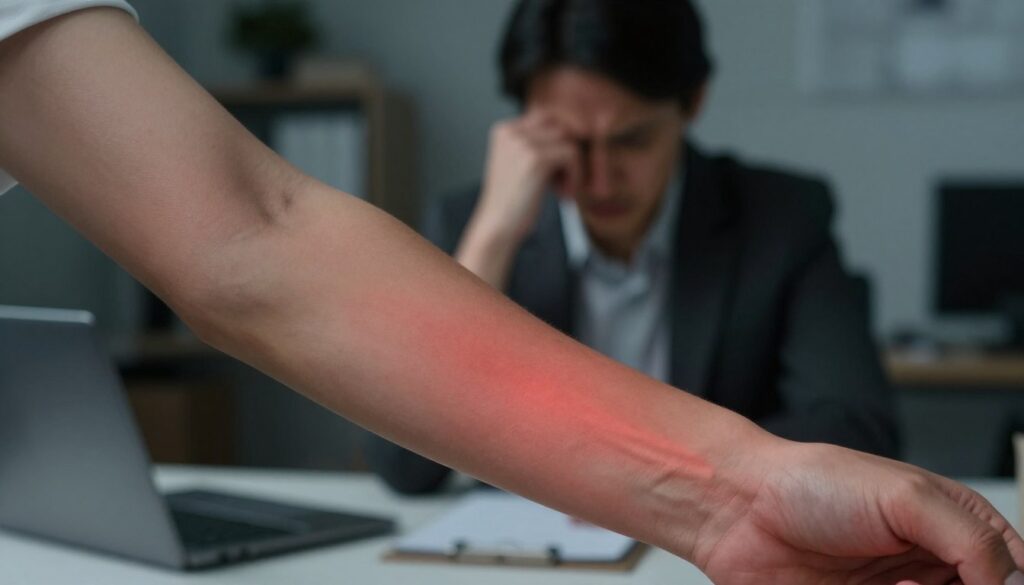
Stress makes your skin more sensitive. Things like heat and cold can irritate your skin. Even things like hot showers can cause problems.
Immediate self-care to calm burning sensations
Use cool compresses to help your skin. Choose simple skincare products. Avoid picking at your skin.
Stress-reduction techniques that improve skin symptoms
Try breathing exercises to calm down. Exercise and sleep well to help your skin. Skincare can also help you relax.
When to see a dermatologist or mental health professional
If your skin problems don’t go away, see a doctor. They can help with serious skin issues. If you’re feeling really anxious, talk to a therapist too.
Doctors can help fix your skin. They might give you special creams. Eating well and staying hydrated can also help.
Conclusion
Skin Burning and Anxiety: What’s the Connection? has solid proof. It shows how stress can make skin feel hot and tight. This is because of how our body reacts to stress.
By understanding this, we see that the symptoms are real. They are not just in our heads. This changes how we view these feelings.
Helping our skin and reducing stress go hand in hand. Use soft, fragrance-free products to protect our skin. For quick relief, try cool packs or avoid things that irritate our skin.
Also, getting enough sleep and doing relaxing activities helps. Drinking water and eating foods that fight inflammation are good too. These steps help our skin and mind feel better.
If the burning and anxiety don’t go away, or if it gets worse, see a doctor. They can help with special treatments and advice. This includes creams for the skin and ways to calm the mind.
Knowing about the connection between skin and mind helps us take action. By taking care of our skin and managing stress, we can feel better. This helps us break the cycle of discomfort and anxiety.