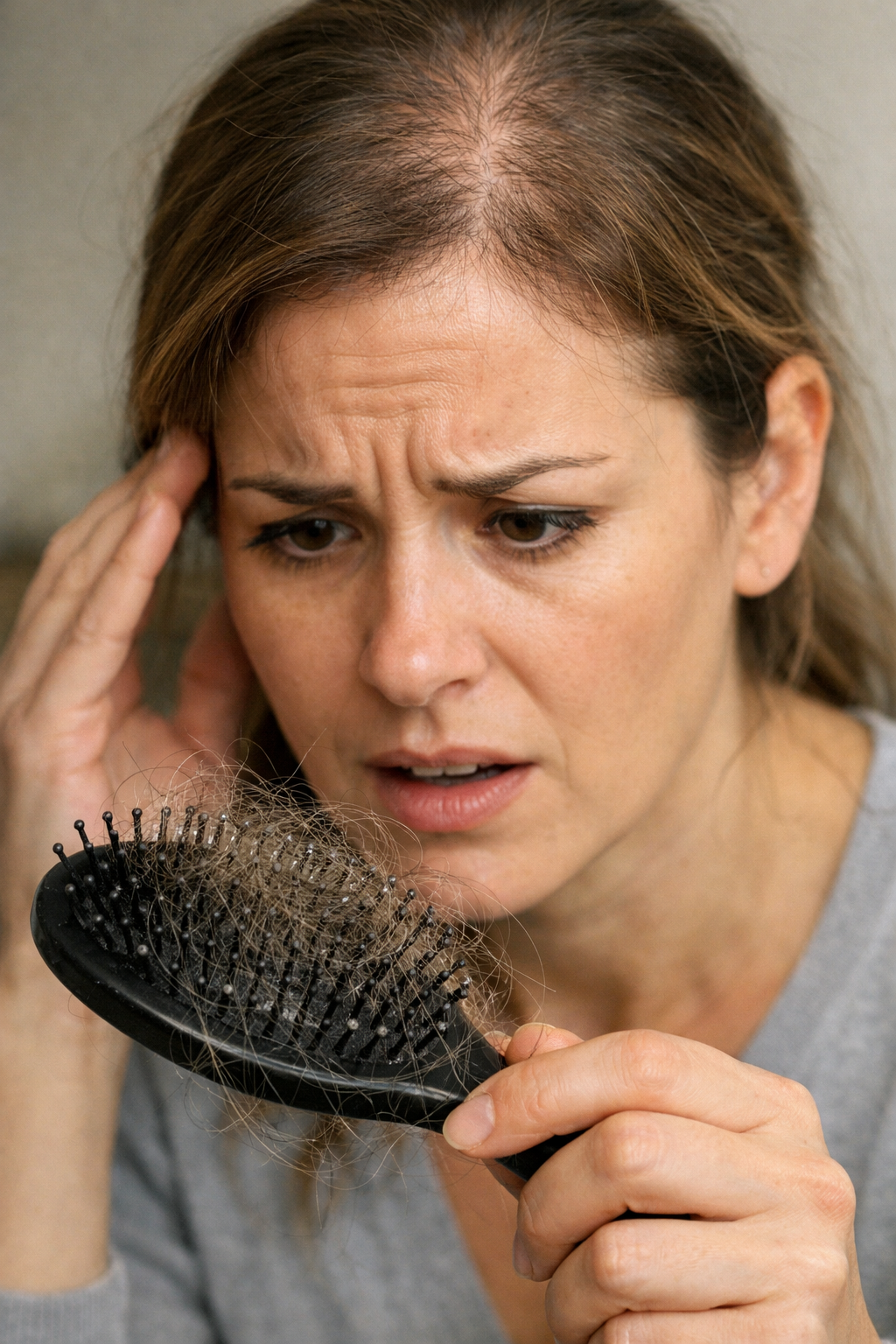
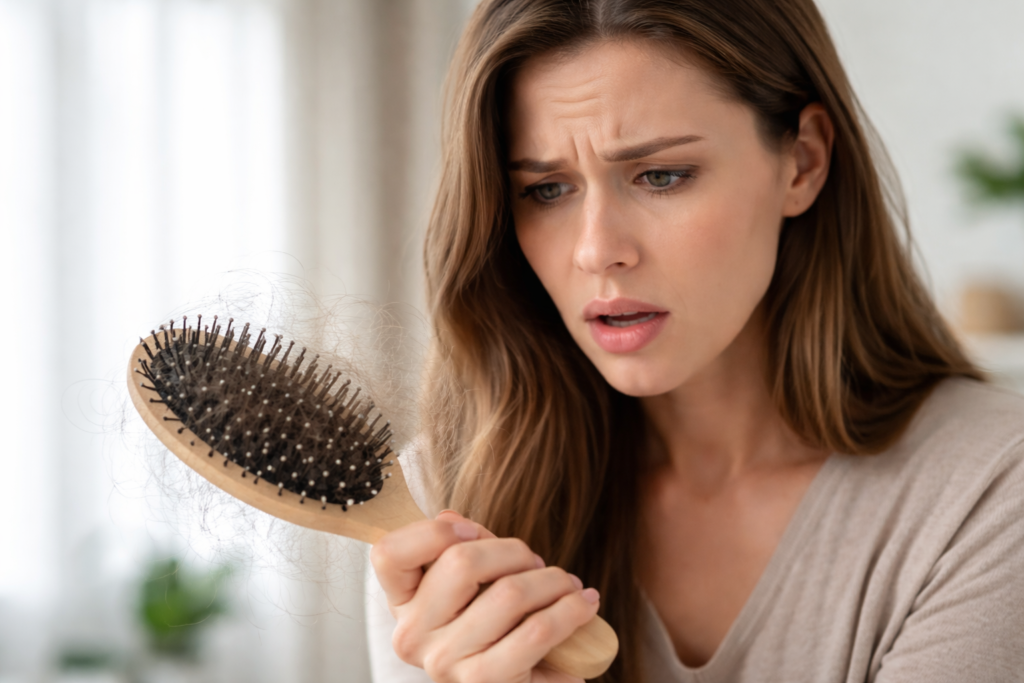
Have you recently noticed more hair than usual in your shower drain or on your hairbrush? Consequently, you might be wondering if your high-pressure lifestyle is to blame. In 2026, we now recognize that hair loss is one of the most visible ways your body signals emotional burnout.
Fortunately, understanding the link between your mind and your scalp can help you reverse the damage. In this guide, we will explain the science of stress-induced shedding and provide simple steps to bring your hair back to life.
1. The Science: Why Stress “Pauses” Hair Growth
First and foremost, it is essential to understand that hair growth happens in cycles. However, severe anxiety can disrupt this natural rhythm through a process called Telogen Effluvium.
The Adrenaline Effect
When you experience a major stress event, your body enters survival mode. As a result:
- The Growth Freeze: Your system diverts energy away from “non-essential” functions like hair growth.
- The Sudden Shift: Up to 70% of your hair follicles can prematurely enter the resting phase.
- The Delayed Shed: Because the hair cycle is slow, you might not notice thinning until 2–3 months after the stressful event has passed.
2. Identifying the “Anxiety Shed”
To begin with, you must distinguish between normal shedding and stress-related loss. Typically, losing 50–100 hairs a day is normal. In contrast, if you notice the following, anxiety might be the cause:
- Diffuse Thinning: You see an overall reduction in volume rather than specific bald spots.
- Scalp Tenderness: Your scalp feels “sore” or tight before the shedding begins.
- Timing: The loss occurs after a period of intense work pressure, grief, or physical illness.
3. Simple Steps to Restore Your Hair
The good news is that stress-induced hair loss is usually temporary. Therefore, by taking immediate action, you can encourage regrowth.
Immediate Scalp Care
- Gentle Cleansing: Instead of aggressive scrubbing, use a sulfate-free shampoo to avoid irritating sensitive follicles.
- Scalp Massage: Regularly massaging your scalp for 4 minutes a day can boost blood flow to the roots.
- Avoid Heat: For the time being, skip the hair dryer and let your hair air-dry to prevent further breakage.
Internal Recovery
- Protein and Biotin: Since hair is made of protein, increasing your intake of lean meats or plant-based proteins is vital.
- The 4-7-8 Breath: By practicing deep breathing daily, you lower the cortisol levels that “freeze” your hair follicles.
4. The 2026 Approach: “Hair-Mind” Resilience
In addition to topical treatments, 2026 wellness trends focus on holistic recovery. For example:
- Digital Detox: Constant notifications keep your nervous system “fried.” By setting boundaries, you allow your body to exit the shed cycle.
- Sleep Hygiene: Because hair repair happens during deep sleep, prioritizing 8 hours of rest is non-negotiable.
5. When to Seek Professional Advice
While most stress-shedding resolves on its own, sometimes you need expert help. Consult a dermatologist if:
- In addition to thinning, you see patches of total hair loss.
- The shedding lasts longer than six months.
- Your scalp is red, itchy, or scaly.
FAQ: Quick Answers
Q: Can a single panic attack cause hair loss? A: Generally, no. It usually takes a prolonged period of high stress or a major shock to trigger Telogen Effluvium.
Q: How long does it take for hair to grow back? A: Once the stress is managed, you will typically see new growth in 3 to 6 months.
Conclusion
In summary, your hair is a reflection of your internal peace. While thinning can be scary, it is simply your body’s way of asking for a reset. By managing your anxiety and nourishing your scalp, you can restore your hair’s strength. Remember, your hair will grow back—and so will your calm.