Have you ever spent a small fortune on a high-end moisturizer, only to find your skin feeling tight and parched just two hours later? You are not alone. Many skincare enthusiasts struggle with persistent dryness despite having a cabinet full of premium products.
But here is a life-changing secret: the problem might not be what you are using, but how you are applying it.
If you have been towel-drying your face until it is bone-dry before reaching for your cream, you are missing out on 50% of the benefits. Today, we are diving deep into the science of hydration and why the “Damp Skin Rule” is the golden standard for a healthy glow.
The Science: Why Damp Skin is a Sponge
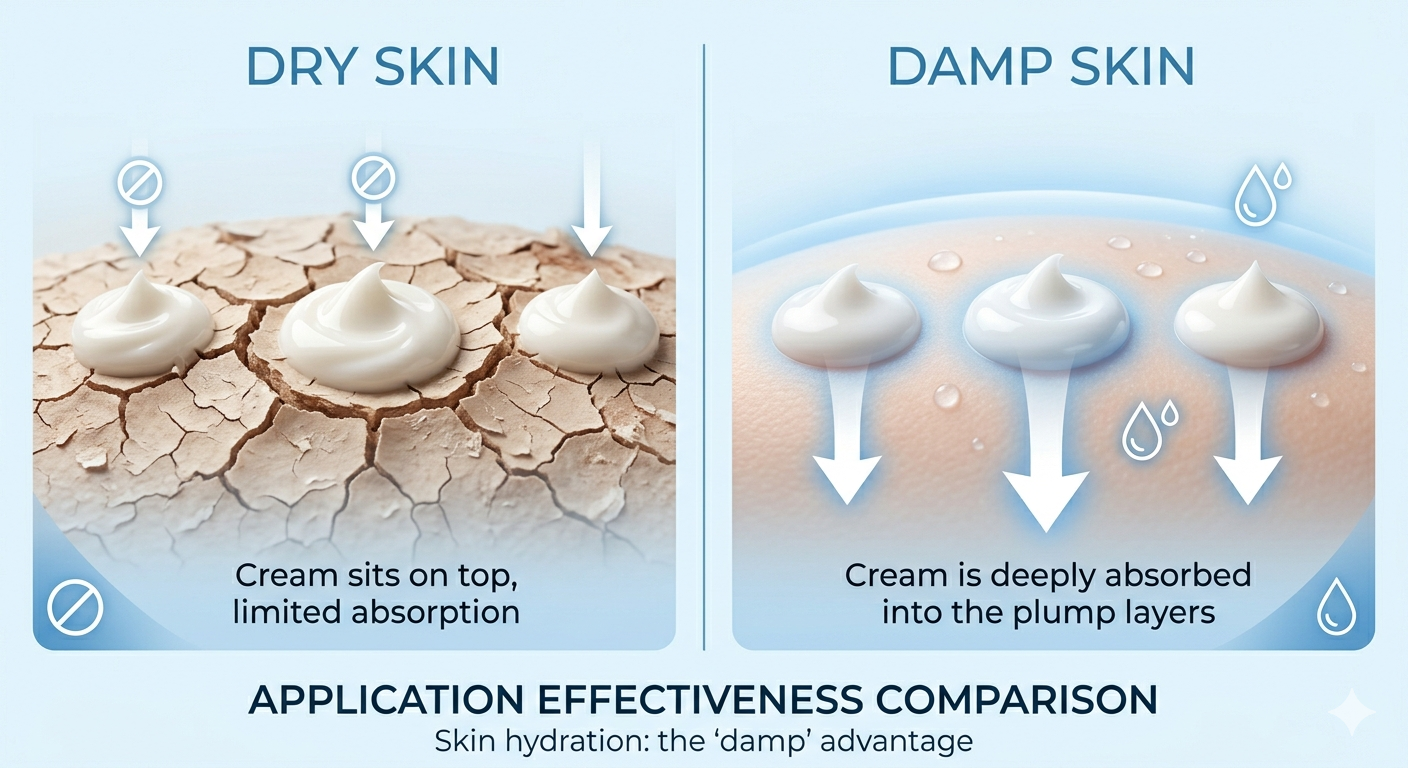
Think of your skin like a kitchen sponge. If you pour liquid soap onto a dry, crusty sponge, the soap just sits on top. However, if the sponge is slightly damp, it instantly absorbs the soap and distributes it through every fiber.
Your skin behaves exactly the same way. When your skin is damp, it is more permeable. This means the active ingredients in your moisturizer can penetrate deeper into the dermis rather than just evaporating off the surface.
Furthermore, moisturizers are designed to perform two main tasks: attracting water and sealing it in. If there is no water on your skin to begin with, the moisturizer has nothing to lock down.
Interactive Quick Check: How Do You Dry Your Face?
- A) I rub my face vigorously with a towel until it’s totally dry.
- B) I pat it gently but make sure no water is left.
- C) I leave it slightly “dewy” or dripping before applying products.
If you answered A or B, keep reading! You are about to upgrade your routine.
Understanding Humectants and Occlusives
To understand why damp skin is vital, we need to look at what is inside your bottle. Most effective moisturizers contain two types of ingredients:
- Humectants: These include Hyaluronic Acid and Glycerin. They act like magnets that pull moisture into the skin. If your skin is dry, they might actually pull moisture out of your deeper layers, making you drier!
- Occlusives: These are oils and butters that create a seal. Their job is to prevent Transepidermal Water Loss (TEWL). According to Healthline, TEWL is the process where water evaporates from your skin into the air.
By applying these ingredients to damp skin, you provide the humectants with external water to grab onto, and the occlusives trap that water right where it belongs.
The Benefits of the “Damp Application” Method
1. Maximum Hydration for Less Product
When you apply lotion to wet skin, it spreads much more easily. You will find that you need a smaller amount of product to cover your entire face and neck. This not only saves you money but also prevents that “heavy” or “greasy” feeling that comes from over-applying product on dry skin.
2. A Brighter, Dewy Complexion
Damp skin application creates that coveted “glass skin” look. Because the water is trapped within the skin layers, your face looks plumper and reflects light better. This is especially important for those focusing on calming sensitive skin, as hydrated skin is less prone to irritation.
3. Strengthening the Skin Barrier
A dry skin barrier is a weak barrier. When you consistently lock in moisture, you strengthen the lipid layer that protects you from bacteria and environmental pollutants.
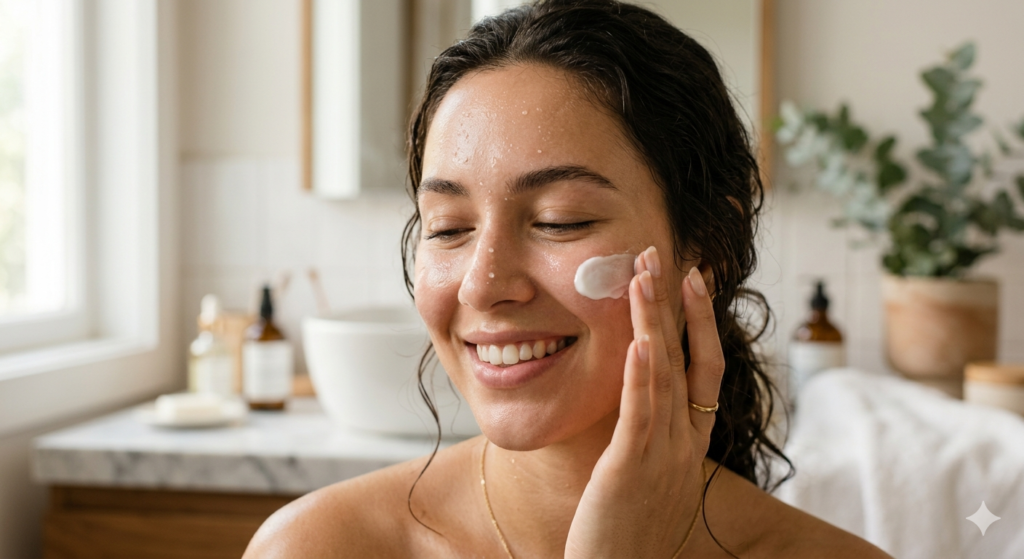
How to Do It Right: Step-by-Step
Transitioning to this method is simple, but it requires a change in habits. Follow these steps for the best results:
- Cleanse: Use a gentle, sulfate-free cleanser.
- The “Three-Second Rule”: After rinsing, do not reach for the towel. Instead, use your hands to shake off excess water. You want your skin to be “damp,” not soaking wet.
- Apply Serums First: If you use a Hyaluronic Acid serum, apply it now.
- Seal with Moisturizer: While the skin still feels cool and moist, massage your moisturizer in upward motions.
- Wait: Give it 60 seconds to “set” before applying sunscreen or makeup.
Pro Tip: If you have already dried your face, don’t worry! Use a facial mist or a splash of thermal water to re-dampen the skin before applying your cream.
Common Myths About Moisturizing
Myth: “My skin is oily, so I don’t need to worry about damp skin.”
Actually, oily skin is often dehydrated. When your skin lacks water, it overcompensates by producing more oil. Applying a lightweight, oil-free moisturizer on damp skin can actually help balance your sebum production.
Myth: “I should apply my retinol on wet skin too.”
Caution! This is an exception. Active ingredients like Retinol or strong acids can become too potent and irritating if applied to damp skin. Save the damp method for your hydrating steps (toners, serums, and creams) and keep the actives for dry skin unless directed otherwise by a dermatologist.
Why This Matters for Sensitive Skin
At Skin Calm Hub, we prioritize soothing the skin. Dryness is the leading cause of itching, redness, and inflammation. By ensuring your skin is damp during the moisturizing phase, you reduce the friction of application and maximize the soothing properties of your products. For more tips on maintaining a peaceful complexion, check out our guide on The Best Morning Skincare Routine for Redness.
Final Thoughts
Skincare is an art, but it is also a science. Sometimes, the smallest tweak in your routine can yield the biggest results. By simply choosing to apply your moisturizer on damp skin, you are giving your cells the hydration they crave.
Try it tonight: Wash your face, skip the towel, and apply your cream. You will feel the difference instantly. Your skin will feel softer, look brighter, and stay hydrated until morning.
FAQ: Quick Answers
Q: Can I use tap water to dampen my skin?
A: Yes, tap water is fine, but if you have very sensitive skin or live in a hard water area, using a facial mist or filtered water is better.
Q: Does this apply to body lotion too?
A: Absolutely! The best time to apply body lotion is within three minutes of stepping out of the shower.
Q: What if my moisturizer feels “soapy” on wet skin?
A: This happens with some formulas. Simply massage it in a bit longer, or ensure your skin is “damp” (no visible droplets) rather than “wet.”