
Have you ever felt like your skin is suddenly too tight for your body? Or perhaps your jaw, neck, and shoulders feel like they are locked in a permanent “grip”? In 2026, as our physical movement decreases and our digital stress increases, Stress-Induced Skin Tightness (Myofascial Tension) has become a primary physical echo of a busy mind.
When anxiety peaks, your body doesn’t just react emotionally; it physically “braces” for impact. Let’s explore why stress makes your skin and muscles feel like they are shrinking, and how to find your space again.
1. The 2026 Science: The Fascia-Stress Connection
In 2026, we no longer look at skin and muscle separately. We focus on Fascia—the connective tissue that wraps around everything in your body.
The “Protective Armor” Response
Anxiety triggers a biological process called Neuromuscular Splinting:
- The Invisible Shield: Your brain perceives stress as a physical threat, signaling your fascia to contract and harden to protect your vital organs.
- Dehydration of the Tissues: Stress hormones like cortisol can affect how your body manages fluid, leading to “dry” and less elastic fascia, which creates that uncomfortable “tight skin” sensation.
2. Common Symptoms of “Anxiety Armor”
In the fast-paced environment of 2026, these symptoms often appear after long hours of high-stakes work:
- The Iron Band Sensation: A feeling of tightness around the forehead or chest, as if a band is being tightened.
- Skin “Pulling”: A sensation that the skin on your face or scalp is being pulled backward.
- Locked Limbs: Difficulty “letting go” of your posture, with shoulders constantly hiked toward your ears.
3. 2026 Solutions: How to “Un-Grip” Your Skin
To release the tightness, you must send a signal of “safety” to both your skin and your nervous system.
Immediate Physical Resets
- The “Soft Gaze” Technique: Intentionally relax the muscles around your eyes. Because the eyes and the neck are neurologically linked, relaxing your gaze automatically tells your neck and shoulder fascia to loosen.
- Dynamic Stretching: Instead of static holds, use slow, flowing movements. In 2026, “micro-yoga” breaks—lasting just 60 seconds—are proven to prevent the fascia from “locking” during stress.
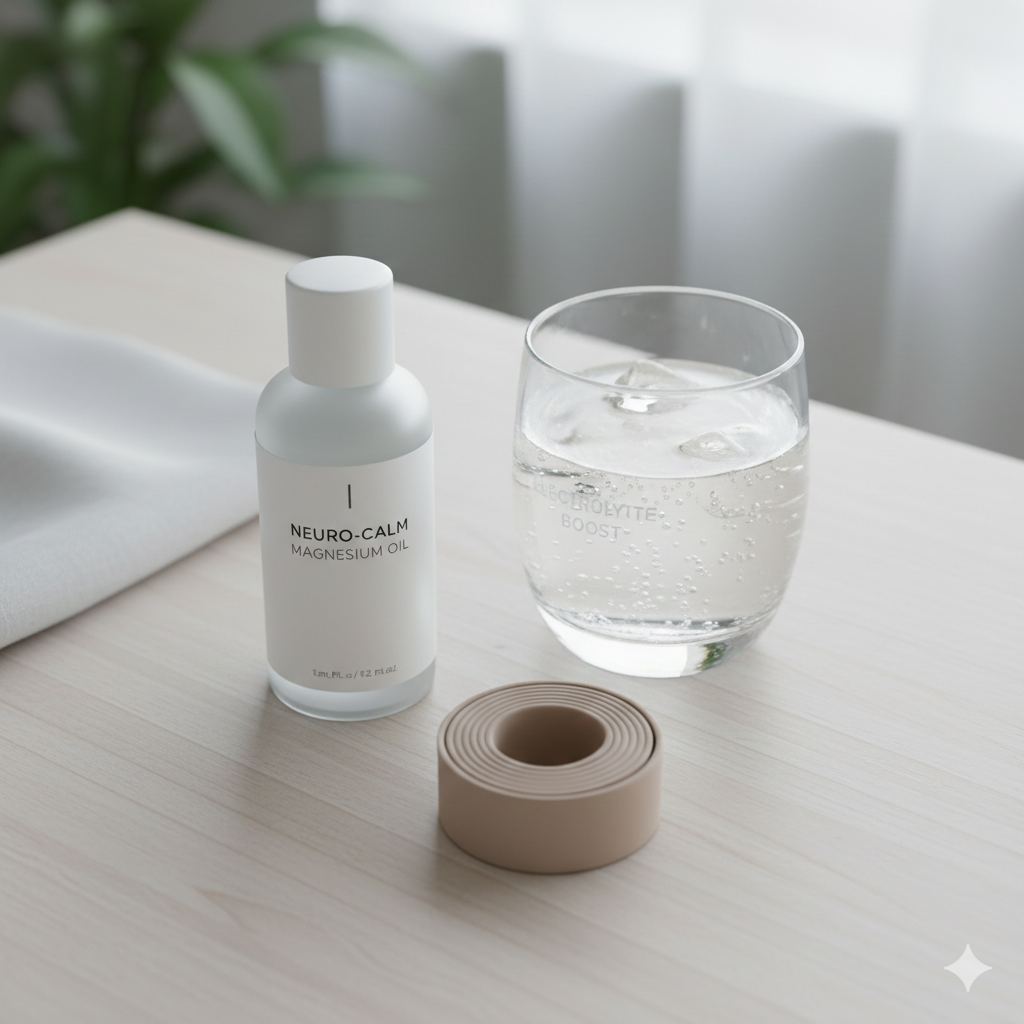
- Hydration with Electrolytes: Skin tightness is often worsened by cellular dehydration. Drinking water with magnesium and potassium helps the fascia remain supple.
The 2026 “Neural-Release” Routine
- Topical Magnesium Oil: Applying magnesium oil to the neck and jaw helps to chemically signal the muscles and the skin barrier to relax.
- Weighted Compression: Using a weighted lap pad provides “Deep Pressure Stimulation,” which lowers cortisol and allows the body’s “armor” to melt away.
4. Building Elasticity in an Anxious World
In 2026, resilience is about Pliability. A body that can bend is less likely to break under stress.
- Fascial Release: Using a soft foam roller or a tennis ball for 5 minutes a day can prevent “stress knots” from becoming permanent.
- Mindful Posture: Check in with your jaw throughout the day. If your teeth are touching, your body is in “brace mode.” Keep a small gap between your teeth to keep your face relaxed.
5. When to Seek Professional Guidance
While “Anxiety Armor” is common, persistent tightness can lead to chronic pain. Consult a professional if:
- The tightness is accompanied by persistent “pins and needles” or numbness.
- You are unable to move your neck or jaw through its full range of motion.
- The physical tension is causing daily tension headaches or migraines.
Frequently Asked Questions (FAQ)
Can anxiety make my skin feel physically tight?
Yes. Through fascial contraction and muscle bracing, your body can create a very real sensation of skin tightness and “pulling.”
Why does my jaw always hurt when I’m stressed?
The jaw is one of the primary places humans store tension. Clenching (Bruxism) is a direct physical response to the “fight or flight” system.
What are “Neuro-Balms” in 2026?
These are topical creams infused with peptides and botanicals like Arnica, designed to penetrate the skin and soothe the underlying nerve-muscle connection.
Conclusion
Your body is not a cage; it is a home. When it feels tight or restricted during times of anxiety, it is simply trying to protect you. By practicing gentle movement, hydration, and conscious relaxation, you can shed your “armor” and feel comfortable and free in your skin once more in 2026.