
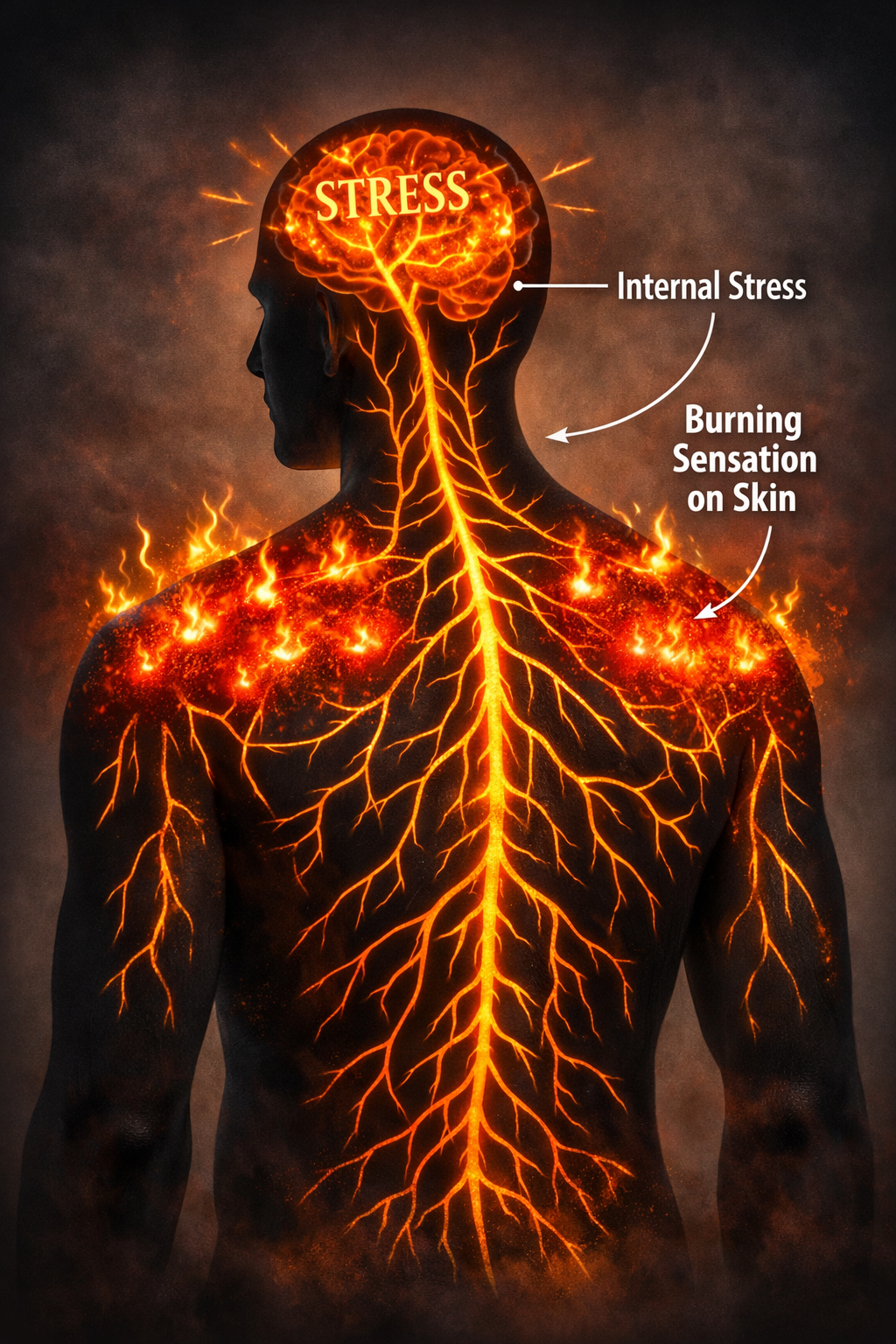
Have you ever felt a sudden, intense heat radiating from your skin, despite having no fever or sunburn? This distressing sensation—often described as a “burning skin” feeling—is a frequent yet misunderstood physical symptom of high stress. In 2026, we recognize this as Neurogenic Burning, a state where your nervous system misinterprets stress signals as physical heat.
Because there is no visible injury, you might feel like the sensation is “all in your head.” However, the heat you feel is a real biological event. In this guide, we will explore why anxiety sets your nerves on fire and how you can extinguish the flame today.
1. The Science: Why Anxiety Feels Like a Burn
To understand this, you must realize that your nerves act as a high-speed communication network. When you are chronically anxious, this network becomes overloaded. Consequently, several physiological changes occur:
- The Adrenaline Surge: When you are under pressure, adrenaline causes your blood vessels to constrict and then dilate rapidly. As a result, you may feel a “flush” of heat that lingers on the surface of your skin.
- Hyper-Excited Nerves: Stress lowers your “sensory threshold.” Therefore, normal signals—like the brush of a shirt—are amplified by the brain and translated into a burning sensation.
- The Cytokine Storm: Stress triggers the release of inflammatory chemicals. Since these chemicals irritate the nerve endings just beneath the skin, they produce a stinging or “sizzling” feeling.
2. Identifying Anxiety-Induced Burning
Generally speaking, a chemical burn or infection remains in one area. In contrast, anxiety-related burning follows a “migratory” pattern. For instance, you should look for these signs:
| Symptom | Anxiety Burning | Physical Injury/Burn |
| Movement | Shifts from the face to the chest or arms. | Stays exactly where the injury occurred. |
| Visible Signs | Skin often looks normal or slightly pink. | Blisters, peeling, or intense redness. |
| Triggers | Occurs during stressful thoughts or fatigue. | Triggered by heat, chemicals, or friction. |
| Relief | Fades when you are distracted or calm. | Requires medical ointments or cooling. |
3. Fast Relief: How to Cool the Nervous System
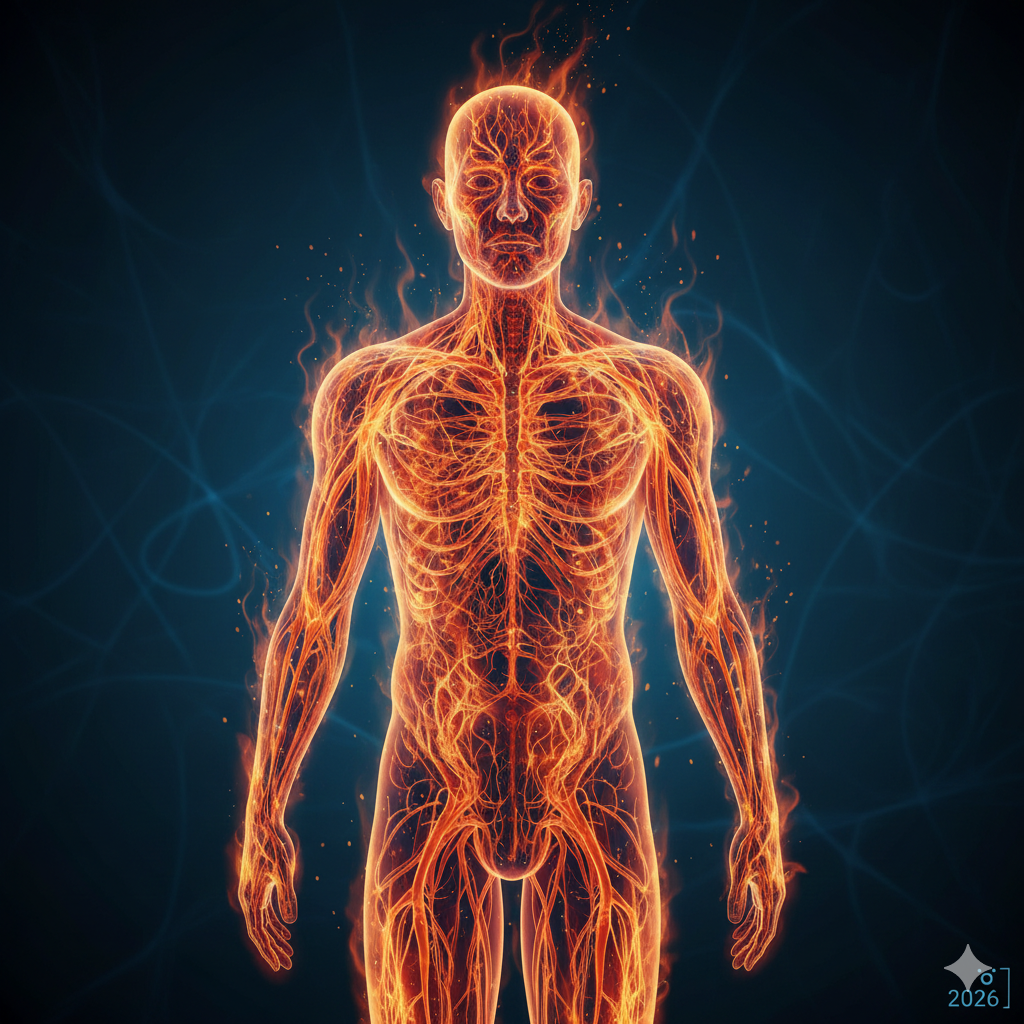
The good news is that since the “fire” is neurological, you can use specific techniques to “reset” your thermal sensors.
Immediate Thermal Cooling
- The 20-Minute Cool Down: Apply a cool (not freezing) compress to the back of your neck. Because the brain’s temperature regulation center is near the brainstem, this helps “calm” the signal at the source.
- Silk and Bamboo Fabrics: If you are experiencing a flare-up, switch to breathable, moisture-wicking fabrics. Since these materials don’t trap heat, they reduce the external stimuli that aggravate your nerves.
Neurological Grounding
- Progressive Muscle Relaxation (PMR): Tense and release each muscle group. By doing this, you force the nervous system to shift from “sensory alert” to “motor action,” which often kills the burning sensation.
- Vagal Toning: Gently splashing your face with lukewarm water can trigger a calming response. As a result, your heart rate slows, and the “adrenaline heat” begins to dissipate.
4. 2026 Strategy: Long-Term Nerve Cooling
Beyond quick fixes, 2026 wellness protocols emphasize “cooling” the body from the inside out. For example:
- Magnesium Glycinate: This mineral is known as “nature’s relaxant.” Since it helps regulate nerve conduction, it can prevent the nerves from becoming hyper-sensitive.
- Anti-Inflammatory Hydration: Drinking water infused with cucumber or mint provides a psychological and physiological cooling effect.
- Digital Boundaries: Reducing “blue light” exposure in the evening calms the brain’s arousal levels. Consequently, you are less likely to wake up with burning skin.
5. When to Consult a Professional
While anxiety is a common cause of burning skin, it is important to rule out other factors. Seek medical advice if:
- The burning is accompanied by a sudden, severe headache or dizziness.
- You notice a “butterfly-shaped” rash across your nose and cheeks.
- The sensation is strictly on one side of the body and follows a specific line (a sign of nerve impingement or shingles).
Conclusion
To wrap up, the sensation of burning skin is your body’s way of saying its “circuit breaker” has tripped. While it feels alarming, it is a manageable symptom of a tired nervous system. By using cooling techniques and addressing the underlying stress, you can put out the fire and feel comfortable again. Remember, your skin isn’t actually burning—it’s just asking for a moment of peace.