
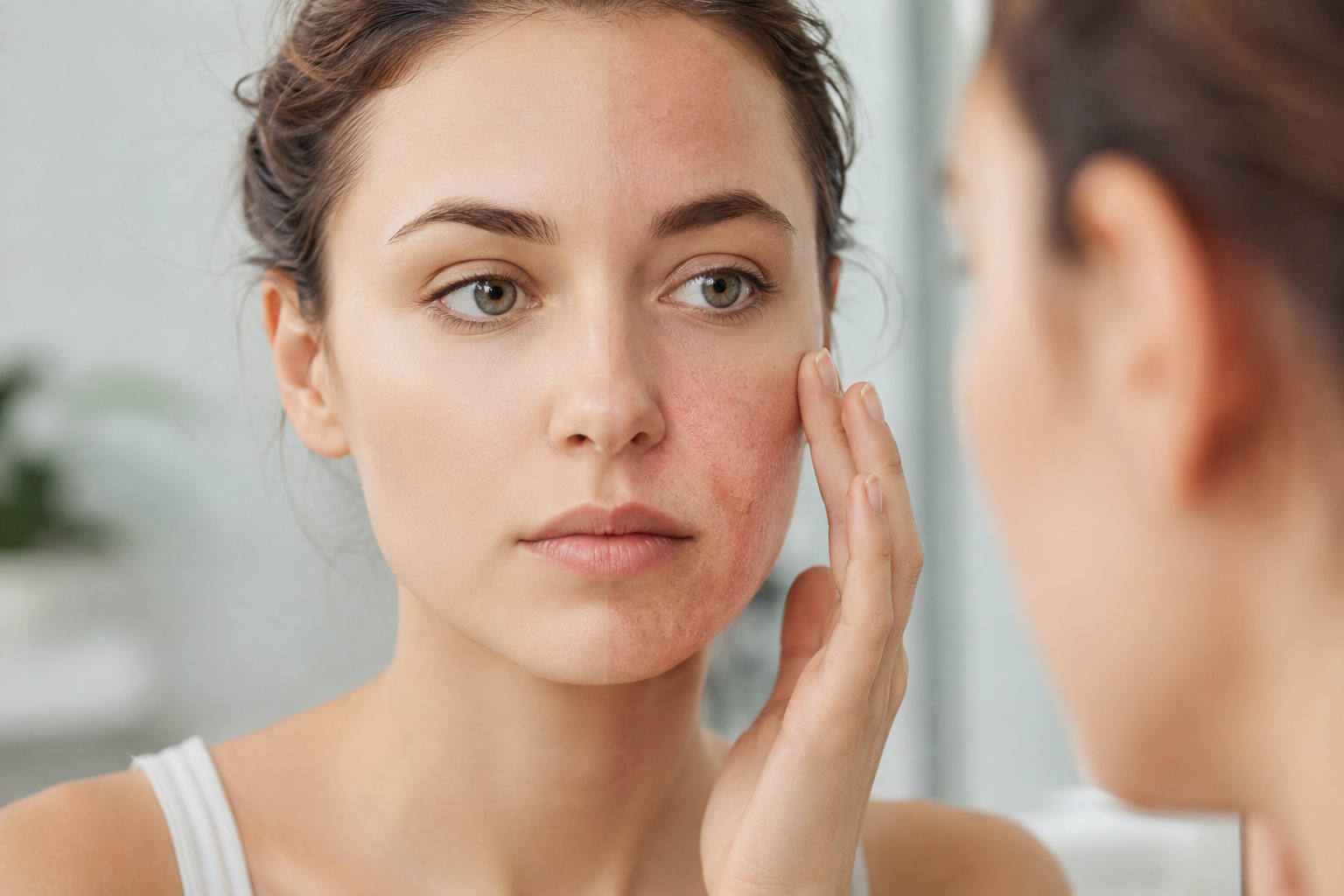
Have you ever woken up with a face that feels angry? One day your skin looks bright and healthy. Then, the next day, it feels red and stinging. It might also feel very tight. Consequently, you might think that you have sensitive skin. However, there is a massive difference between a skin type and a skin condition.
Specifically, you need to know this difference to fix your face. If you treat a broken barrier like normal sensitivity, then you will not see results. Conversely, if you ignore your natural skin type, you may cause more harm. Therefore, we will dive deep into these two skin states today. In addition, you will learn how to give your skin exactly what it needs to glow.
What Exactly is Sensitive Skin?
To begin with, let us talk about sensitive skin. When we use this term, we usually mean a genetic skin type. In other words, you are born with it. Specifically, it does not just appear because you bought a new serum. Instead, it is a lifelong way that your skin interacts with the world.
For instance, people with sensitive skin often have a thinner outer layer of skin. Consequently, their nerve endings stay much closer to the surface. Because of this, they react very quickly to the environment. Furthermore, wind, heat, or cold can cause immediate redness. If you have struggled with “fussy” skin since you were a child, then you likely have a sensitive skin type.
Moreover, sensitive skin often links to health conditions. These include things like rosacea or eczema. According to Healthline, sensitive skin is a clinical reality. Thus, you cannot “fix” or change your skin type. However, you can certainly manage it. For example, you should always use products that calm the skin. You must avoid things that try to change how your skin works. You want to support your skin, not fight it.
What is a Compromised Skin Barrier?
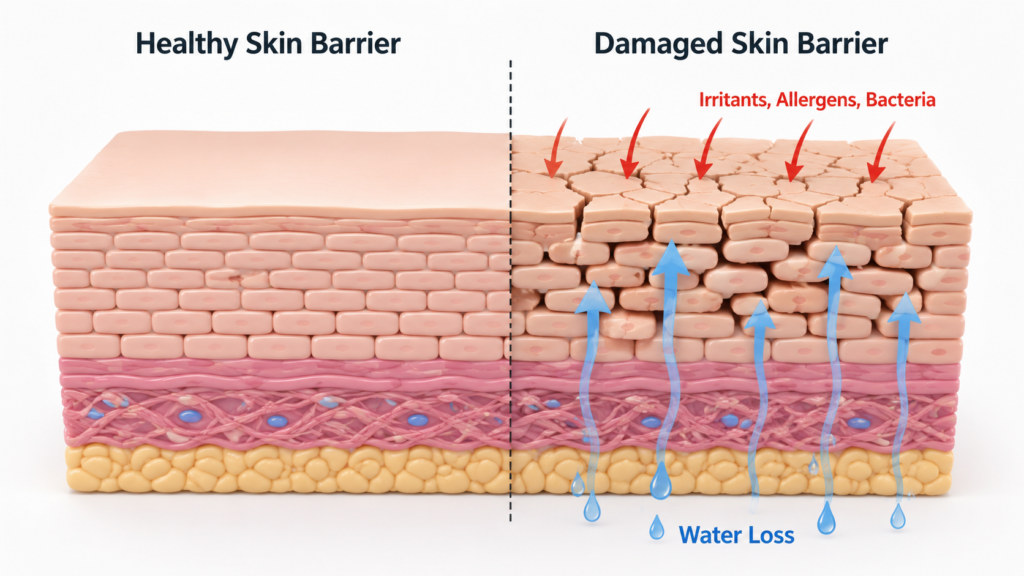
In contrast, a compromised skin barrier is a temporary state. Basically, your skin barrier acts like a strong brick wall. In this analogy, the skin cells are the bricks. Lipids and fats act like the glue or mortar. When this wall stays strong, it keeps water inside your body. Additionally, it keeps dirt and bacteria out.
However, this wall can easily break down. Specifically, we call this a “compromised” state. This means the glue in your wall has cracked. As a result, water evaporates too fast. In the industry, people call this process Trans-Epidermal Water Loss. Unlike sensitive skin, you usually cause a damaged barrier yourself. Your habits or your environment cause the damage.
For example, many people over-exfoliate with harsh acids. Similarly, using very hot water strips the skin of its natural oils. If your skin was healthy last month but now burns when you apply cream, then your barrier is likely broken. Therefore, it is not a permanent flaw in your DNA. Instead, it is a clear cry for help from your face. You can fix this problem with the right care.
Spot the Difference: A Simple Guide
Admittedly, it can be hard to tell these two apart. This is because the symptoms look and feel the same. Both states cause redness. Both states cause stinging. To help you decide, look at this quick comparison list:
| Feature | Sensitive Skin (Genetic) | Compromised Barrier (Damage) |
| How long? | Chronic: It lasts your whole life. | Acute: It is sudden and temporary. |
| Where from? | Genetic: It is in your DNA. | External: It comes from habits. |
| Triggers | Predictable: You know what hurts. | Random: Everything hurts right now. |
| Feel | Smooth: Skin is thin but smooth. | Rough: Skin feels like sandpaper. |
| Look | Flush: You blush very easily. | Dehydrated: It looks shiny but dry. |
If you want to start a healing journey, then you should visit our Sensitive Skin Routine Guide. Indeed, we offer many steps to calm your face quickly. In addition, you can find product reviews for gentle brands there.
Why Does the Skin Barrier Break Down?
Often, the shift from healthy skin to a damaged state happens fast. Mainly, we live in a world of “more is more” skincare. For instance, many people use strong retinols every night. Then, they add vitamin C every morning. Finally, they use a harsh scrub or a peel. While these ingredients are great, using too many at once creates a disaster.
In addition to products, the air plays a huge role. For example, cold winter air strips the skin of moisture. Likewise, indoor heating does the same thing. Furthermore, some cleansers are too strong. If your skin feels tight after you wash it, then you have likely stripped your barrier. Therefore, you must watch your habits. You must also watch the weather. Your skin needs a balance of oil and water to stay happy.
How to Repair a Damaged Barrier Fast
If you realize your barrier is damaged, then please do not worry. Fortunately, the skin is very good at healing itself. However, you must change your routine today. This allows the healing to happen. You must stop the damage before you can start the repair.
1. Start a “Skin Fast”
First, you must stop all active ingredients. Specifically, this means no retinol and no acids. Moreover, you should even stop using Vitamin C for a week. Because your skin is currently on fire, adding “work” will only hurt more. Instead, stick to a very basic routine. Use only a gentle cleanser and a thick cream. Do this for at least three weeks.
2. Use “The Big Three” Ingredients
Secondly, your skin needs specific tools to rebuild its wall. Thus, look for products that contain:
- Ceramides: Specifically, these fill the cracks in your skin wall.
- Hyaluronic Acid: Consequently, this pulls water back into the cells.
- Panthenol: In addition, this ingredient stops the stinging fast.
3. The Moisture Sandwich
Thirdly, apply your moisturizer to damp skin. This is because this trick traps water on the surface. Then, it forces the moisture into the skin. Furthermore, you can add a face oil on top to seal everything in. For more expert tips, read our article on repairing irritated skin.
Long-Term Care for Sensitive Skin
On the other hand, your goal is different if you have sensitive skin. Specifically, you want to prevent flares. You do not need to fix damage every day. Therefore, you must become an expert at reading labels. For instance, avoid products with alcohol or heavy scents. Because these triggers make blood vessels grow, they lead to permanent redness.
Furthermore, you should always do a patch test. To do this, put a tiny bit of a new cream behind your ear. Then, wait for a full day. Consequently, this simple step prevents a huge reaction on your face. Clearly, it is much better to be safe than sorry. You should also keep your routine very simple. Less is always more for sensitive types.
Final Thoughts: Listen to Your Skin
In conclusion, kindness is the only answer. This is true for both skin types. After all, your skin is your body’s largest organ. Specifically, it works hard to protect you every single day. Therefore, when it turns red, it is not being difficult. Instead, it is trying to talk to you. It is telling you that it needs more moisture or fewer chemicals.
So, simplify your steps. Also, focus on deep moisture. Most importantly, stay patient with yourself. While healing takes a little time, a strong barrier is worth the wait. Your skin will thank you with a healthy glow.
FAQ: Quick Answers
1. Can I have both at the same time?
Yes, absolutely. In fact, people with sensitive skin break their barrier more easily. This is because their skin is naturally thin. Therefore, they must be extra careful with new products.
2. How long does repair take?
Usually, it takes about 28 days. This is how long skin takes to grow. However, you will feel better in two weeks if you stay consistent. Specifically, the stinging should stop first.
3. Does drinking water fix the barrier?
While water is good for your body, it does not fix the surface. Instead, you must use creams to seal the moisture in. Consequently, topical care is the most important part.
4. Should I stop using sunscreen?
No, do not stop. Because a damaged barrier needs protection from the sun. Therefore, switch to a mineral sunscreen. Specifically, look for zinc oxide. These are very gentle and do not burn.