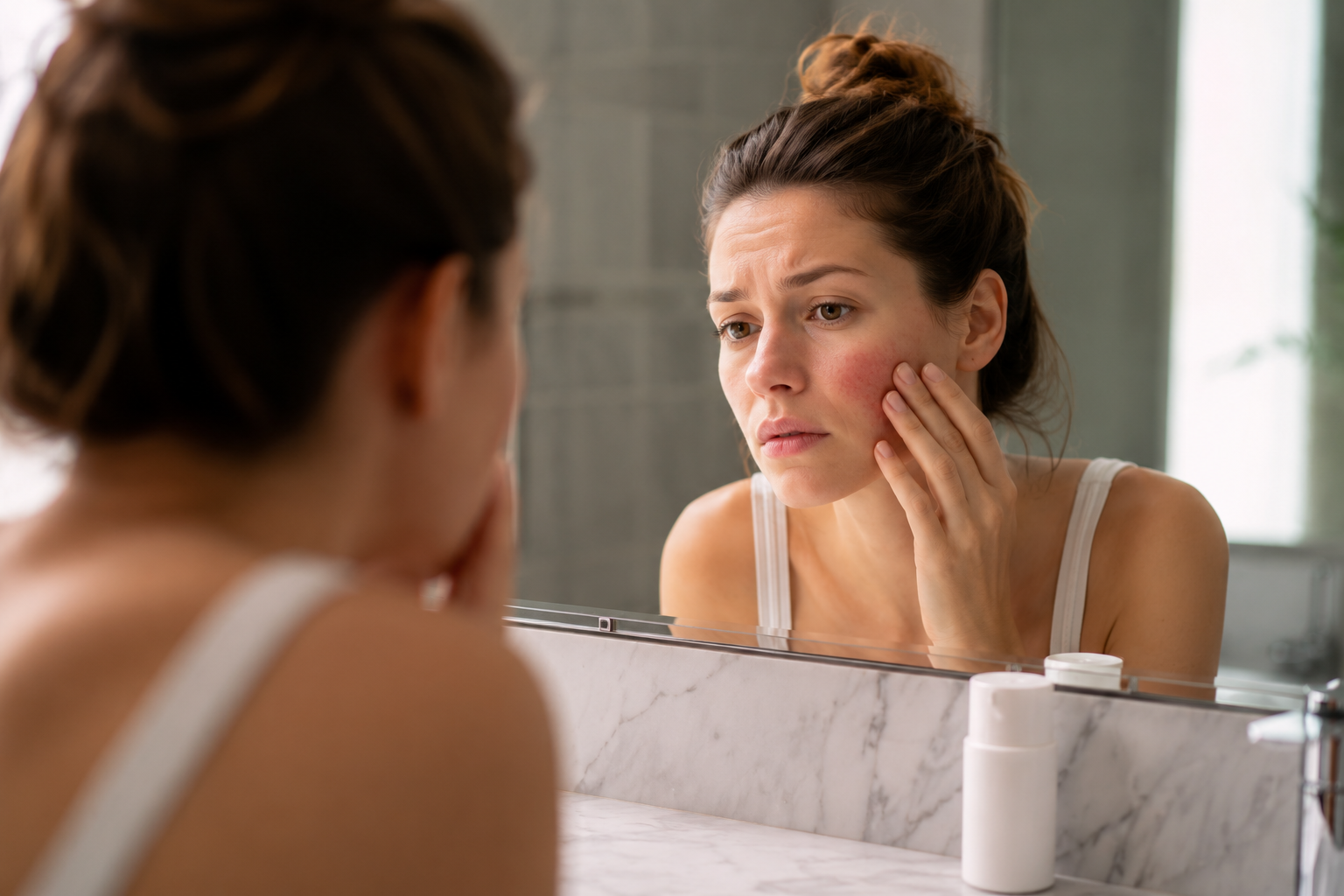
We have all been there. You finally buy that luxury serum or the “holy grail” moisturizer everyone is talking about. You apply it before bed, dreaming of waking up with a glass-skin glow. Instead, you wake up to a nightmare: itchy red patches, tiny bumps, or a burning sensation that won’t quit.
A sudden skincare allergic reaction is more than just a physical discomfort; it is emotionally draining. It feels like a betrayal by a product you trusted. However, do not panic. Your skin is a resilient organ, and with the right steps, you can calm the storm.
In this guide, we will walk through the immediate steps to take when your skin reacts poorly, how to soothe the irritation, and how to prevent it from happening again.
Step 1: Immediate Action – Stop and Rinse
The moment you feel a tingle that isn’t “active ingredient” tingling, or see redness forming, you must act.
First, stop using the product immediately. This sounds obvious, but many people try to “push through” thinking their skin just needs to get used to it. If it’s an allergic reaction, waiting will only make it worse.
Next, wash your face with lukewarm water. Do not use your regular cleanser if it contains acids (like Salicylic or Glycolic acid) or fragrances. Use a very gentle, soap-free cleanser or just plain water. The goal is to remove every trace of the offending product without stripping your skin’s natural barrier further.
Step 2: Cool the Inflammation
When your skin reacts, it is essentially “on fire” at a microscopic level. Your immune system has sent a flood of histamines to the area, causing vasodilation (redness) and itching.
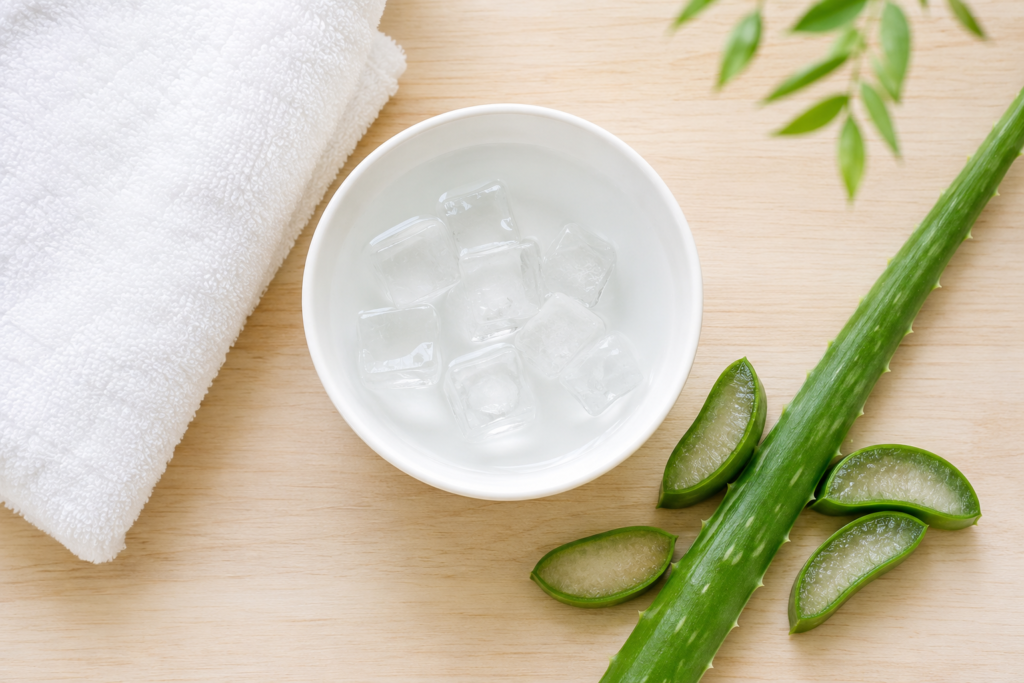
Applying a cold compress can work wonders. Wrap a few ice cubes in a clean, soft cotton cloth and press it gently against the affected areas for 5-10 minutes. Furthermore, the cold temperature helps constrict blood vessels and numbs the itching sensation.
Step 3: Identify the Type of Reaction
It is helpful to know what you are dealing with. Generally, skin reactions fall into two categories:
- Irritant Contact Dermatitis: This happens when a product is too harsh for your skin barrier (common with Retinols or high-strength Vitamin C). It usually causes stinging or dryness.
- Allergic Contact Dermatitis: This is a true immune response. It often involves extreme itching, swelling, or hives.
According to Healthline’s guide on Contact Dermatitis, symptoms can sometimes take 24 to 48 hours to appear. This is why it is sometimes tricky to pinpoint exactly which product caused the flare-up.
Step 4: Simplify Your Routine (The “Skin Fast”)
While your skin is healing, “less is more.” This is the time to put away your 10-step routine. Consequently, you should stick to the basics for at least a week:
- A Gentle Cleanser: Non-foaming and fragrance-free.
- A Basic Moisturizer: Look for ingredients like Ceramides or Hyaluronic acid which help repair the skin barrier.
- Sunscreen: Mineral sunscreens (Zinc Oxide) are usually less irritating than chemical ones during a reaction.
If you are looking for specific advice on rebuilding your barrier, check out our Essential Guide to Patch Testing to ensure your next product doesn’t cause the same trouble.
Step 5: Over-the-Counter Relief
If the itching is keeping you up at night, you might need a little extra help.
- Hydrocortisone Cream: A 1% hydrocortisone cream can significantly reduce swelling and redness. However, only use it for a few days, as long-term use can thin the skin.
- Oral Antihistamines: If you have hives or widespread itching, an over-the-counter antihistamine can help calm your body’s internal immune response.
- Aloe Vera: Pure, fragrance-free aloe vera gel is a natural anti-inflammatory that provides an instant cooling effect.
What You Should NEVER Do
When your skin is irritated, it is incredibly vulnerable. Avoid these common mistakes:
- Do Not Scratch: Scratching creates micro-tears in the skin, which can lead to bacterial infections and permanent scarring.
- Do Not Exfoliate: You might be tempted to “scrub away” the bumps. This is a huge mistake. Exfoliating will destroy your already compromised skin barrier.
- Do Not Try Other New Products: Do not try to “fix” the reaction with another new “soothing” mask you’ve never used before. Stick to what you know works.
When Should You See a Doctor?
Most skincare allergic reactions fade within a few days. However, you should seek medical attention if:
- The swelling is around your eyes or lips.
- You see signs of infection, such as pus or yellow crusting.
- The reaction covers a large portion of your body.
- You experience difficulty breathing or swallowing (this is a medical emergency called Anaphylaxis).
How to Prevent Future Reactions
The best way to deal with a reaction is to never have one. This is where Patch Testing becomes your best friend.
Before applying a new product to your entire face, apply a small amount to the inside of your forearm or behind your ear. Wait 24 to 48 hours. If no redness or itching occurs, it is likely safe for your face. Additionally, always read the ingredient list. Look out for common allergens like synthetic fragrances, parabens, and essential oils (like lavender or citrus oils) which can be highly irritating to sensitive skin types.
Final Thoughts
Dealing with a sudden allergic reaction is frustrating, but it is not the end of the world. Treat your skin with kindness, give it time to breathe, and return to the basics. Your complexion will thank you for the patience and care.
Remember, healthy skin is not about using the most products; it is about using the right products for your unique biology. Stay calm, stay hydrated, and let your skin heal at its own pace.
FAQ: Quick Answers
Q: How long does a skincare allergic reaction last?
A: Typically, symptoms improve within 2 to 4 days once you stop using the product, but a full recovery of the skin barrier can take up to two weeks.
Q: Can I use makeup during a reaction?
A: It is best to avoid makeup until the redness and itching have subsided to prevent further irritation of the pores.
Q: Is “natural” skincare safer for allergic reactions?
A: Not necessarily. Many people are allergic to “natural” ingredients like essential oils, nuts, or plant extracts.
Q: What is the fastest way to get rid of the redness?
A: A cold compress and a thin layer of 1% hydrocortisone cream are generally the fastest ways to reduce visible redness.